Evaluation of Litigation Services
4. Findings
4.1 Effectiveness
4.1.1 Managing Demand
Justice Canada is effectively managing demand for litigation services, which requires flexibility in managing sudden increases in types of litigation.
The demand for litigation services provides an important context for the evaluation, and the ability to address the demand is a reflection of the effectiveness of the litigation services provided to federal departments and agencies.
NLS
The Department provides litigation services to all federal departments and agencies, although the majority of litigation files belong to three clients. These “top three” clients (in terms of the number of actively managed litigation filesFootnote 15 by the NLS) were consistent over the time period of the evaluation and show the concentration of litigation services. The CRA consistently had the most litigation files by a substantial margin, with 42% of the actively managed litigation files between FYs 2014-2015 and 2017-2018), followed by Immigration, Refugees, and Citizenship Canada (IRCC) (22%) and CIRNAC/ISCFootnote 16 (10%). These high-volume clients are from three of the Portfolios —TLSP, PSDIP, and AAP. Figure 3 shows the number of actively managed litigation files by the “top six” clients by fiscal year.
Figure 3: Number of Actively Managed NLS Litigation Files by Top Six Clients

The demand for litigation services is driven by a variety of factors, and changes in demand can occur suddenly, requiring Justice Canada to be flexible in its response. For example, changes in legislation can lead to an expansion of litigation in a particular legal area, or a class of litigants may decide to initiate a number of class action lawsuits within a relatively short period, which can affect the demand for legal resources and type of expertise required.
For the NLS, while the number of actively managed litigation files overall has declined by 18% from 36,781 files in FY 2014-2015 to 30,003 in FY 2017-2018, the decrease is concentrated to a reduction in active cases for two clients — CIRNAC/ISC and IRCC. CIRNAC/ISC experienced a 67% decline in the number of actively managed litigation files due, in large part, to the settlement of residential school litigation. IRCC experienced a 27% decline in actively managed litigation files between FY 2014-2015 and 2017-2018 due in part to changes to the Immigration and Refugee Protection Act, where cases that used to proceed directly to the Federal Court of Canada (FCC) now go before the Immigration and Refugee Board. Key informants reported that IRCC is now experiencing an increase in litigation due, in part, to high volumes of asylum claims, and Justice Canada has plans to add litigation staff to handle the increase in volume of FCC cases likely to result.
While the number of actively managed litigation files has decreased, the number of total hours spent by NLS on these files has remained relatively stable (1.26 million in FY 2014-2015 to 1.29 million in FY 2017-2018). The need for maintaining the overall level of effort is likely explained by the nature of actively managed litigation files between FY 2014-2015 and FY 2017-2018, which are increasingly of higher risk and complexity. For example, the percentage of actively managed litigation files that are both high complexity and high risk increased from 596 in FY 2014-2015 to 871 in FY 2017-2018 (a 46% increase). While they constitute a small percentage of the total files, these high-complexity/high-risk files are flagged as needing the greatest attention.
Keeping pace with demand
One way to assess the degree to which Justice Canada is keeping pace with litigation demand is to examine the number of files opened and closed each fiscal year.
NLS
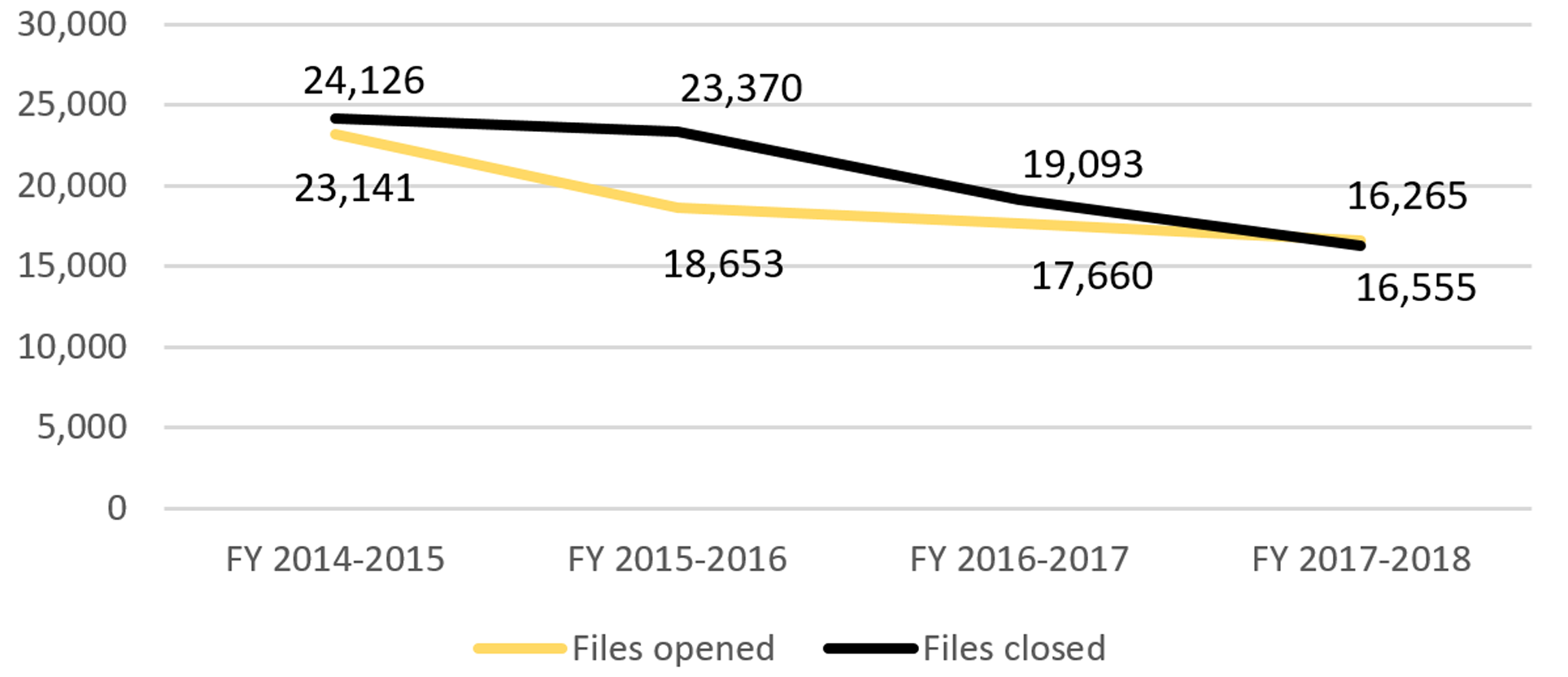
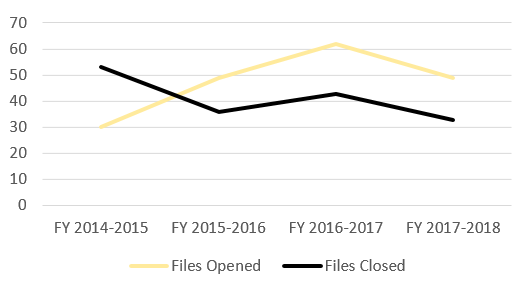
The NLS appears to be keeping pace with demand. More files were closed than opened until FY 2017-2018, as shown in Figure 4.
Figure 4: Number of NLS Files Opened and Closed by FY
In terms of the other litigation units, all of the units have experienced increased demand, and most have been able to keep pace with demand through the use of various strategies.
TLS
The TLS unit and tax law litigation overall (the TLS unit and the tax litigation services provided by regional offices) indicate particular challenges or strains to meet demand. The TLS unit in the NCR has experienced rapid growth in actively managed litigation files, with a 33% increase between FYs 2014-2015 and 2017-2018 (see Figure 5). Corresponding to this increase in volume, the TLS unit has gone from keeping pace with demand, as reflected by opening and closing approximately the same number of files in FY 2014-2015, to a situation in subsequent years where the number of files opened far exceeds the number of files closed. In addition, when considering the tax litigation work overall,Footnote 17 documents and data indicate an increase in complexity, with a growing opening inventory of Class C files (where the amount at issue is $150,000 or more) before the Tax Court of Canada (TCC) (a 38% increase from 1,160 in FY 2014-2015 to 1,604 in FY 2017-2018) and a 24% increase in actively managed complex TCC files from 1,563 to 1,944. To address the increasing demand across both the TLS unit and the tax litigation services provided within NLS in the regional offices, Justice Canada has implemented a strategy to address demand over the next five to ten years. This strategy includes a multi-year framework to review workload demand, workforce requirements and workforce expertise, and to develop an action plan to address the results.
ESDC
The ESDC/VAC LSU (see Figure 6) has also experienced rapid growth of actively managed litigation files. The LSU conducts the litigation for benefit-related matters under the Canada Pension Plan, Employment Insurance Act, and the Old Age Security Act. Most of these matters appear before the Social Security Tribunal (SST), which was established in 2013. As a result of the creation of the SST, the volume of litigation files handled by the ESDC/VAC LSU increased by more than 300% between FYs 2014-2015 and 2015-2016. The number of actively managed litigation files has continued to increase, although it has leveled off with an increase of 31% between FYs 2015-2016 and 2016-2017 and a 16% increase between FYs 2016-2017 and 2017-2018. Comparing the difference between the number of files opened and files closed demonstrates that the ESDC/VAC LSU is managing the increase in volume. While about 100% more files were opened than closed in FY 2016-2017, that decreased to 52% in FY 2017-2018. In order to assist in managing demand with respect to additional cases related to the new SST, a pilot project has been initiated in which the ESDC/VAC LSU and the NLS are sharing the work related to the SST tribunal, with certain cases being led through the LSU and others in the regions or CLS. This LSU continues to provide litigation support, as well as paralegal support to Justice regional offices to support SST litigation.
TBS
In FY 2017-2018, the TBS LSU (see Figure 7) opened 23% more files than it closed.Footnote 18 While key informants did not indicate any issues with addressing the demand for litigation services, the demand rose with a 4% increase in the number of actively managed litigation files between FYs 2014-2015 and 2017-2018. The increase in demand for litigation services is expected to continue as the TBS LSU litigation work is before the Federal Public Sector Labour Relations and Employment Board, which has recently undertaken efforts to reduce its backlog. TBS LSU will review and manage its staffing complement as necessary in order to address any potential increase in demand in upcoming years.
CBLS
The CBLS (see Figure 8) have experienced a 28% increase in the number of actively managed litigation files between FYs 2014-2015 and 2017-2018 and have opened more litigation files than it have closed since FY 2015-2016. However, the CBLS’ litigation inventory includes a number of files that will not require litigation and are therefore never assigned to litigation counsel.Footnote 19 Many of the CBLS’ actively managed litigation files have a consent agreement in place and therefore remain under surveillance for years, but do not require substantial counsel time. Consequently, the ability to address the demand for litigation services is not currently considered to be an issue.
Figure 5: Number of TLS Unit Files Opened and Closed by FY
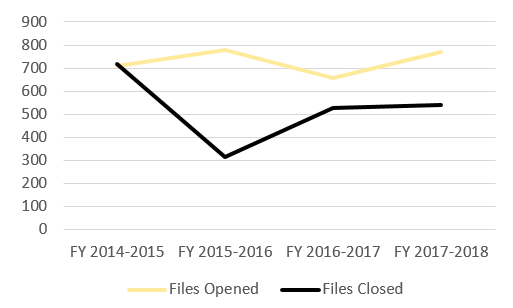
Figure 6: Number of ESDC/VAC LSU Files Opened and Closed by FY
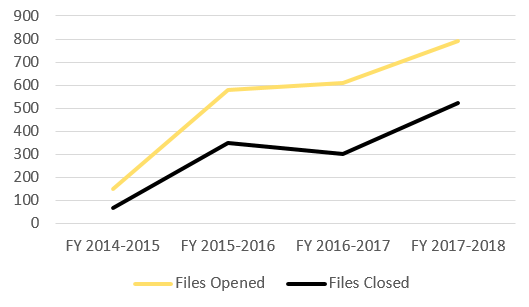
Figure 7: Number of TBS LSU Files Opened and Closed by FY
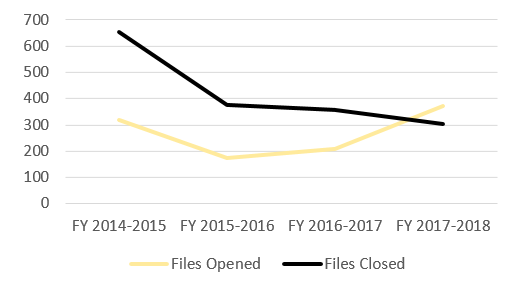
Figure 8: Number of CBLS Files Opened and Closed by FY
Overall, the expectation is that demand will continue to increase for litigation services based on a number of factors, including:Footnote 20
- an increase in class action litigation, consistent with trends seen across our society. Class action proceedings are a relatively new phenomena, but have become a major factor in the federal government’s landscape of legal risks, with more than 150 proceedings representing a potential liability in the billions of dollars, and increasingly being used as a lever to influence federal policy;Footnote 21
- the Supreme Court of Canada decision in Daniels v. Canada 2016 SCC 12, which held that non-status Indians and Métis people are “Indians” for the purpose of Section 91 of the Constitution Act of 1867;
- commitments to supporting the Missing and Murdered Indigenous Women Inquiry and reducing incarceration and mental health issues experienced by Indigenous Canadians;
- additional funding provided to the CRA to detect, audit, and prosecute tax evasion and collect outstanding tax debts;
- the CRA’s response to the Auditor General of Canada’s report on income tax objections, which involves substantial efforts to reduce its backlog of files;
- increased immigration levels and policies related to refugee reform, automated decision making, and lifting of visa requirements;
- the government’s focus on resource development projects and environmental regulatory reform;
- major procurement files (e.g., the national ship building procurement strategy) and regulatory changes (e.g., marijuana); and
- environmental and climate change issues.
4.1.2 Quality of Litigation Services
Justice Canada delivers high quality litigation services, meeting or exceeding established departmental targets.
Justice Canada Litigation: Client satisfaction
The Department has set performance indicators for litigation services that relate to the quality of litigation servicesFootnote 22. Performance indicators related to client satisfaction are measured by a standardized Client Feedback Survey that asks clients to rate the quality of legal services received and the extent to which Justice Canada is meeting its service standards for provision of responsive, accessible, timely, and useful services. For each element of client feedback for litigation services, Justice Canada has exceeded its performance target of 8.0 on a 10-point scale.Footnote 23 Based on the overall satisfaction score, results indicated that clients’ satisfaction has increased from Cycle II results.
| Service | Cycle II (2012) | Cycle III – partial (2017-18) |
|---|---|---|
| Overall | 8.3 | 8.5 |
| Responsiveness/accessibility | Combined service score not available for these measures of service quality. | 8.9 |
| Usefulness | 8.6 | |
| Timeliness | 8.5 | |
Justice Canada: Litigation success ratio
An additional indicator of success is the “success ratio” for litigation files, which has a performance target of 70% successful outcomes. The methodology applied, starting in FY 2015-2016, considers two types of results to be successful: “complete wins” in adjudicated files brought by or against the Crown, as well as all settled files.Footnote 24 Partially successful adjudicated files are not considered as having a successful outcome for the purpose of the “success ratio” calculation. Litigation services have consistently exceeded this performance target of 70% successful outcomes (81% in FY 2015-2016, 80% in FY 2016-2017, and 79% in FY 2017-2018).Footnote 25
NLS success ratios by risk and complexity
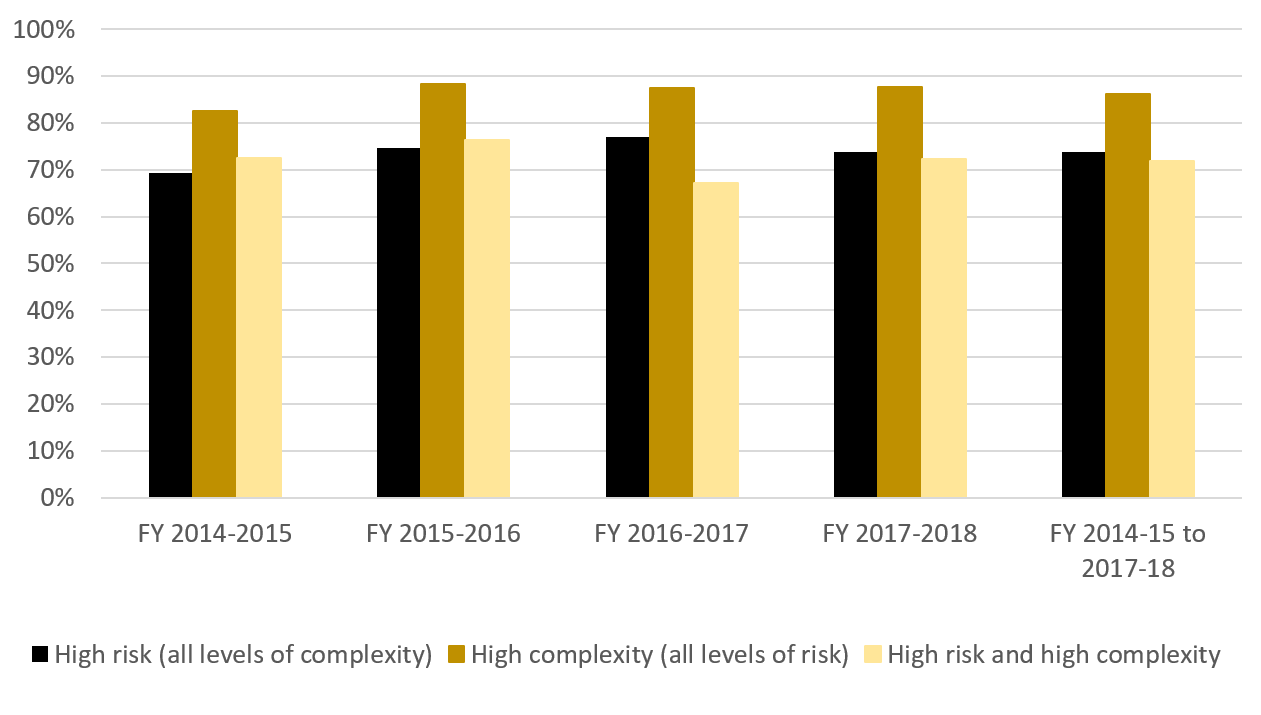
The evaluation applied the success ratio methodology to certain types of files to determine how successful the NLS was in resolving them. An analysis of the success ratios for NLS files by legal risk and complexity demonstrates a high level of success in litigation outcomes for high-risk and/or high-complexity files, which would include the most high-profile, sensitive litigation files.Footnote 26 The files with both high risk and high complexity between FY 2014-2015 and FY 2017-2018 have a successful outcome 72% of the time. Over this time period, high-risk files (regardless of complexity level) have a 74% success rate, while high complexity files (regardless of risk level) have an 86% success rate (see Figure 9). Files of medium or low risk and/or complexity also exceeded 70% for all five years.
Figure 9: Success Ratio Applied to High-risk and High-complexity NLS Litigation Files (Adjudicated and Settled) by Fiscal Year and Overall
NLS success ratios – Adjudicated files only
In addition, the evaluation considered the success of the NLS in court by examining the results of adjudicated files only. The NLS has also achieved an almost 70% success rate (complete wins) between FYs 2014-2015 and 2017-2018.
| Result | FY 2014-2015 | FY 2015-2016 | FY 2016-2017 | FY 2017-2018 | FY 2014-2015 to FY 2017-2018 |
|---|---|---|---|---|---|
| Successful | 68% | 68% | 72% | 69% | 69% |
| Partially successful | 6% | 6% | 6% | 4% | 6% |
| Unsuccessful | 26% | 25% | 22% | 27% | 25% |
Potential areas for improvement
Confirming the administrative data and Survey results, almost all key informants who worked with litigators (LSUs, Portfolios, and other Sectors) generally consider the service to be of high quality and either meeting or exceeding most or all of the established service standards. As evidence of the high quality of litigation services, they pointed to the high degree of experience and expertise of litigation counsel when it comes to the conduct of litigation, the ability to master the relevant substantive law,success on the litigation files handled, and the collaborative approach to working with the LSUs. Any quality issues were identified as “outliers” by these key informants. Examples of quality issues fell into two main categories: instances where counsel have not been well aligned to the files in terms of litigation experience; and situations where the client perspective is not adequately taken into account, which often includes lack of consultation with the LSU. The relationship between litigators, LSU counsel, and the Portfolios is discussed in more detail in Section 4.1.6.
While services were generally considered timely by clients based on Client Feedback Survey results and by 76% (n=221/292) of counsel who responded to the litigation staff survey, many key informants, primarily those within the NLS, reported increasing challenges in providing timely service. Timeliness of service was largely affected by factors such as the growing volume of litigation (tax litigation was an example), client responsiveness related to providing instructions, the internal NLS approval processes, and the length of time required to assign counsel to class action litigation. Some regional offices mentioned that, as a mitigation strategy, they put in place various processes to engage clients and the LSUs early in the development of legal strategies on high profile files, to ensure information flows to the client, and to anticipate the need for instructions.
4.1.3 Consistency, Coherence, and Speaking with One Voice
The NLS structure facilitates consistency and coherence of litigation services across Justice Canada.
Coherence and consistency in the approach to litigation services nationally supports the ability of Justice Canada to speak with one voice. Almost all key informants believe that Justice Canada is effective at speaking with one voice. While some noted that conversations can be difficult, they commended counsel for having open and frank discussions that remain productive and eventually serve to reach a consensus on a legal position. Survey results confirm this, as three-quarters of counsel and paralegal respondents (75%; n=282/377) believe that Justice Canada effectively or very effectively speaks with one voice.
The evaluation findings indicate that the NLS has implemented processes and directives that either have or will lead to greater consistency and integration of litigation services. The NLS is credited by key informants with facilitating the ability of Justice Canada to speak with one voice on litigation by building closer linkages across regional offices through formal and informal structures and serving as a single point of contact for clients. Counsel and paralegal survey respondents believe that the creation of the NLS had a positive (41%; n=101/249) or neutral (47%; n=117/249) impact on the capacity of Justice Canada to speak with one voice in litigation matters.Footnote 27
A specific example of an initiative that is considered to support greater coherence and consistency in litigation services is the new approach to class actions, which reflects a transition from coordination of class actions to national management of class actions. The National Class Action Proceedings Management Framework was launched in March 2019, so it is too early to determine its effectiveness in managing class actions, but having the NLS centralized management structure was considered to have facilitated its development.
The NLS has also supported the development of national litigation policies and directives that promote consistency in approach to litigation. One example is the Directive on Civil Litigation Involving Indigenous Peoples, which promotes a litigation approach that is consistent with the goal of reconciliation and provides guidance to counsel on applying the Principles Respecting the Government of Canada’s Relationship with Indigenous Peoples. While the directive was developed by Justice Canada, the NLS played a leading role in its development and can now ensure consistent application of the directive through national training, interpretation of its terms, and coordination of litigation so that consistent positions are taken across the country.
Contribution of litigation committees
The litigation committees are a key mechanism in ensuring that Justice Canada speaks with one voice. The evaluation found that the committees continue to serve a key role in ensuring consistency and quality assurance.
National Litigation Committee
The NLC continues to be an effective forum to support the national management of litigation and facilitate speaking with one voice. Over four-fifths (82%; n=111/136) of counsel survey respondents believe that the NLC is effective. In general, key informants believe that the appropriate individuals attend the meetings, as they are the most senior and experienced counsel in Justice Canada. However, Portfolio/LSU key informants thought that the NLC could consider inviting LSU lawyers whose files are being discussed, at least as observers, and also that the NLC should include greater consideration of the policy implications of legal positions.
Regional litigation committees
The evaluation found that, prior to the creation of the NLS, the regional litigation committees tended to operate in isolation. As a result, they served as an important quality assurance mechanism for reviewing pleadings in their region, but they did not share best practices across regional offices.
Since the creation of the NLS, regional litigation committees have begun coordinating with each other. Starting in FY 2017-2018, they began to create more standardization where they considered it appropriate. NLS key informants considered the efforts to standardize governance principles and facilitate linkages across regions a positive development, although maintaining regional differences in approach was also important. In addition, the regional litigation committee chairs have recently (2019) begun meeting outside of the NLC in order to share best practices and discuss issues of mutual concern.
NCR Litigation Committee
After the creation of the NLS, the NCR Litigation Committee has been expanded to include not only the CLS, but the other litigation units outside of the NLS (the six “other litigation units” defined in Section 1.2 and the Trade Law Bureau). The evaluation found that the NCR Litigation Committee has fostered a national approach to litigation cases handled within the NCR by bringing together the CLS and the other litigation units into one regional litigation committee. The NCR Litigation Committee is considered effective in improving the quality of litigation services through its review of documents prepared by counsel to be filed at courts of appeal and the creation of a network where litigation counsel within the NCR can learn from each other’s experiences. Survey respondents in NCR litigation units almost unanimously (97%; n=38/39) considered the Committee to be effective or very effective in interacting and collaborating with their offices on litigation files.
4.1.4 Clarity of Accountability Structures
The creation of the NLS has provided some clarity of accountability structures, particularly in terms of regional reporting on litigation files. However, there was insufficient clarity with respect to business processes, including roles and responsibilities on litigation between Portfolios (including LSUs) and the NLS.
Reporting structure
The reorganization of litigation services and the creation of the NLS were intended to result in the national management of litigation services, thereby clarifying accountability structures for litigation services within Justice Canada. Under the former structure, the management of litigation services was divided between the Litigation Branch (which included the CLS and a specialized class actions unit), the regional offices, and LSUs that directly provided litigation services. While the head of the Litigation Branch (ADAG Litigation) had functional and coordination responsibility for all litigation conducted by or on behalf of Justice Canada, the regional offices did not report directly to the ADAG of the Litigation Branch.
With the creation of the NLS, line reporting of RDGs, which used to be to the DM and Associate DM of Justice, was shifted to the ADAG NLS. The RDGs became part of the newly created NLS BoD, along with the NCR Director Generals (which includes CLS). Regional litigators still report to their regional managers as they did before. Other units within Justice Canada that directly handle litigation, but are outside of the NLS, continue to report as they did before. For these other litigation units, the main change resulting from the creation of the NLS is the institution of the NCR Litigation Committee of which they are now members.
Overall, the evaluation found that the NLS has made accountability structures clearer than it had been under the Portfolio structure. Prior to the NLS, regional offices had to adjust reporting requirements based on the different Portfolios and LSUs involved. As one key informant put it, the NLS has “taken the guesswork out of that.” As a result, key informants from regional offices believe that reporting is better coordinated and there is heightened awareness that the ADAGO NLS must be kept apprised of major litigation. In addition, more reporting is going through the RDGs, so they are more aware than before of the positions taken in court on the litigation in their offices, according to a few key informants.
However, the evaluation findings indicate that the clarity related to the roles and responsibilities of Portfolio-level management (offices of the Assistant Deputy Ministers [ADMs]) on litigation files could still be improved. Just over half (55%; n=130/238) of counsel surveyed consider the roles and responsibilities of Portfolio-level management (offices of the ADMs) related to decision making on litigation files unclear.
Counsel also wanted more clarity on how and when the NLS, Portfolios, and LSUs should be involved at various stages of litigation. In particular, counsel wanted more information on when or whether they should still include the Portfolio when reporting on files and one suggestion was the creation of protocols for both NLS and LSU counsel regarding when and how the Portfolios should be engaged on litigation files. The protocols could serve to clarify the role of the Portfolio ADMs on litigation, and whether and when litigators should include Portfolios when reporting on particular litigation matters to the ADAG NLS, or when regional offices should respond directly to Portfolio requests for information. Protocols could also address situations related to whether LSU counsel should directly involve the ADAG NLS when the client and Justice Canada disagreed about the legal position to take in court. It was also suggested that either the NLS should be invited to a Portfolio-wide meeting or the NLS should offer a training day for LSUs to explain their role, including how the regional offices work with the ADAG NLS.
Roles and responsibilities for decision making within the NLS
The NLS has recently undertaken several initiatives to clarify when to involve the ADAGO NLS on specific litigation files. First, in recognition of the need for clarity on ADAGO NLS involvement, the NLS BoD agreed upon the need for each region to develop guidelines on communications with the ADAGO NLS on litigation files, and in late 2018, regional offices began developing guidelines. Second, the adoption of the Directive on Civil Litigation Involving Indigenous Peoples and plans for the creation of a regional champion and a challenge function within each regional office should provide greater clarity of the nature of ADAGO NLS involvement in Indigenous litigation files. The Directive promotes a litigation approach that is consistent with the goal of reconciliation and provides guidance to counsel on applying the Principles Respecting the Government of Canada’s Relationship with Indigenous Peoples. While the Directive was developed by Justice Canada, the NLS played a leading role in its development and can now expect consistent application.
Despite these initiatives, the evaluation findings indicated some ongoing need for clarity regarding the roles and responsibilities of the ADAGO NLS related to decisions on litigation files. Just over 40% of counsel who responded to the Survey reported that the decision-making roles and responsibilities of the ADAGO NLS (41%; n=101/245) are unclear or very unclear. The findings indicate that counsel desire more clarity related to the level and nature of ADAGO involvement in files and when the ADAGO NLS should become more involved in a litigation file. Previously, this level of ADAGO involvement was usually only in cases that involved pan-governmental issues that impacted several departments. However, in other types of files, the ADAGO NLS is now assuming a decision-making role.
4.1.5 Communication and Engagement
There is an ongoing need to facilitate communication and engagement between Portfolios (including LSUs) and the NLS, and within NLS units in order to best support client-centric and strategic partnerships.
The evaluation considered the collaboration and working relationships between the NLS litigation units with Portfolios (including LSUs) and within NLS. The findings in this section also touch on a priority area of the Vision Project, which is supporting client-centric strategic partnerships.Footnote 28 The Portfolios and LSUs serve as the liaison between the client and the NLS on litigation files, so an effective working relationship between Portfolios, including LSUs and the NLS, is critical to supporting client-centric strategic partnerships.
NLS Litigation Units with Portfolios/LSUs
In general, key informants and survey respondents considered the interaction and collaboration between NLS litigation units and Portfolios/LSUs to be effective. The majority of survey respondents (78%; n=274/350) considered the relationship with LSUs to be effective or very effective. Similarly, many key informants (NLS and Portfolio/LSUs) considered the relationship between NLS litigation units and Portfolios/LSUs to be strong and collaborative.
While the overall evaluation findings reflect that NLS litigation units and Portfolios/LSUs are working together effectively, some Portfolio/LSU counsel expressed concern that there are inconsistencies in the approaches to collaboration on litigation files by region, litigator and LSU, which impact the effectiveness of the collaboration. In addition, an unintended consequence of the creation of the NLS raised by some key informants (NLS and LSUs/Portfolios) was that there is less communication and engagement between NLS litigation units and Portfolios/LSUs now. Prior to the creation of the NLS, the regional office counsel had more of a connection to the Portfolios and, therefore, a better network from which to draw when issues or questions arose related to client department policies or legislation. LSU key informants raised concerns that litigators will have less understanding of the client departments’ realities and policy objectives and this could have negative impacts on litigation, as well as client relationships. It was reported that the ADAG NLS is aware of these unintended impacts and conversations are underway on how to ensure that the benefits of the Portfolio structure are not lessened due to the new structure of litigation services.
Within NLS
The effectiveness of the interaction and collaboration among NLS units was viewed positively by key informants. Survey respondents were also positive about the collaboration within NLS (see Figure 10). Some key informants noted that the connection between regional offices is stronger than before, although a few wanted more interaction with other regional offices. National practice groups and an annual NLS conference were two suggestions for sharing information across regions and building networks.
Figure 10: Effectiveness of NLS Interaction and Collaboration on Litigation Files
Based on your experience, how would you rate the level of effectiveness of the interaction and collaboration on litigation files between your office and the following areas?

Communication about NLS to Justice Staff
The evaluation found that litigation staff within Justice Canada were not well informed of the rationale for and achievements of the NLS. Survey respondents were asked to assess the clarity of communications related to:
- the rationale for the reorganization of litigation services;
- the anticipated goals for the NLS;
- planned changes to litigation services; and
- achievements of the reorganization of litigation services, including achievements by the NLS.
Between 71% (n=307) and 79% (n=332) of respondents reported that Justice Canada communications have been unclear or very unclear. For each topic, between 21% and 29% (n=87 to n=123) reported that communications have been clear or very clear. These results are more pronounced among counsel. For each area listed above, over three-quarters of counsel respondents replied “not clear” or “very unclear”, in comparison to roughly two-thirds of paralegal respondents and around half of legal assistant respondents. Key informants, who were typically in management or on litigation committees, also believe that communication on the initiatives and achievements of NLS can be improved.
4.1.6 Legal Risk Management
Justice Canada continues to review its legal risk management (LRM) approach to ensure legal risk assessments are comprehensive, helpful, and meaningful to clients.
Counsel across Justice Canada are required to assess legal risk and complexity on their files. These assessments are an important method for the Department to communicate with clients about the work it is undertaking for them in a consistent and coherent way so that clients have a clear understanding of the legal risk and complexity of their litigation files. That importance is reflected in “meaningful risk assessments” being one of the four priority areas of the Vision Project, which is a key component of the Departmental Strategic Plan’s direction to foster a whole-of-government approach.Footnote 29 Meaningful legal risk assessments should be comprehensive and helpful to clients and effectively communicated to them.Footnote 30
Evaluation results indicate general satisfaction with the effectiveness of litigation services in assisting with the management of legal risk. More specifically, Client Feedback Survey results (Cycle III, results to date) indicate that clients are satisfied with how Justice Canada advised them on issues and developments that may impact them; worked with them to identify legal risks; and incorporated their instructions in the review and development of legal options to mitigate identified legal risks. On all of these dimensions, litigation services exceeded the target of 8.0 out of 10.0.Footnote 31
Generally speaking, key informants (NLS and LSUs/Portfolio) also considered litigation services to be effective in assisting with the management of legal risk. Justice employees also provided some suggestions for improvement.
The legal risk grid does not adequately communicate risk. The risk assessment in iCase was generally considered to be the least helpful aspect of the LRM framework by counsel who were interviewed, and this was confirmed by survey results where over two-fifths of counsel (44%, n=129/293) reported that they were unsatisfied or very unsatisfied with it. Survey results related to the framework’s effect on consistency in litigators’ assessments of legal risk levels also stand out. Less than half (48%, n=124/256) of counsel assessed the framework as “good” or “excellent” in this area. Key informants and survey respondents highlighted some limitations of the current LRM framework, including that the framework is not sufficiently nuanced (i.e., there is a need for flexibility in use of the current LRM grid to allow for consideration of a broader range of factors affecting risk, and to ensure that risk assessments meet the needs of different clients/Portfolios).Footnote 32 Most key informants (NLS and LSUs/Portfolio) raised the issue of the high proportion of medium-risk files, which clients often do not find to be particularly helpful. Ongoing efforts by Justice Canada to improve the LRM framework and, in particular, to unpack medium risk in a way that maintains some standard of consistency in approach while providing the client with more helpful direction, were viewed favourably by most key informants.
Working closely with LSUs on legal risk assessments is important. Key informants identified a need, in some cases, for litigators and LSUs to work together more closely on legal risk assessments, as the LSU counsel are more aware of the broader context of the legal and policy issues implicated in the case and the other non-legal risks important to the client, such as financial risks, media attention, potential reputational harm, and/or the impact on policies and programs.
Clients desire earlier risk assessments. In addition, some LSU key informants emphasized the importance of earlier risk assessments from litigators in order to support clients’ decisions regarding whether to settle a case, what level of resources to assign to a file, and to enable an earlier determination and management of contingent liability. According to these LSU key informants, an assessment based on the information available at the time is considered better than no legal risk assessment. A method suggested for handling this issue for complex litigation was to have working or practice groups for certain subject matters (of current cases and/or potential future cases) to identify legal risks and discuss how to strategically manage them. In addition, LSUs are better aware of client preferences in terms of length and type of advice desired for legal risk narrative. Some LSU counsel noted that the narratives do not always provide the advice that clients want to receive, such as whether to pursue settlement, aggressively pursue taking the case to trial, or the arguments that can be advanced by the Crown if the case is pursued.
Training on legal risk could build common understanding. Key informants (NLS and LSUs) and survey respondentsFootnote 33 also called for more training opportunities to ensure both clients and counsel have a solid understanding of how legal risk assessments are used, as well as other elements related to the legal risk model. A few NLS key informants noted that counsel would also benefit from training to refresh them on LRM, the importance of legal risk assessments and how they are used, and how to better and more clearly communicate what medium risk means.
4.2 Efficiency
4.2.1 Management of Litigation Services
The evaluation found that the NLS has undertaken substantial work on creating efficient management practices, and the two years since its inception indicate progress toward this commitment.
Increased analytical and strategic capacity
Consolidated budgets
Multiple lines of evidence (document review, key informant interviews) support that the consolidation of budgets (from 35 separate budgets into one NLS budget) has been a positive change resulting from the reorganization of litigation services, which has simplified budgeting and planning processes. The consolidated budget has enabled the NLS to more accurately, and earlier in the FY, identify whether it will have a deficit or a surplus which can be reallocated for other purposes. Documents showed that the NLS has identified surpluses early, as in both 2017-2018 and 2018-2019, the NLS was able to reallocate projected surplus to address technology needs (e.g., increase server capacity, purchase new computers and Next Generation software). However, key informants cautioned that the loss of some connection between LSUs and regional offices has had an effect on the accuracy of forecasts of estimated litigation expenditures provided to clients and the timeliness of receiving this information to support the client’s budgetary cycle.
The right work at the right level
Through the Resource Allocation Analysis Project, the NLS has made (and continues to make) efforts to increase the efficiency of its management of litigation resources. The goal of the project is to ensure the right work at the right level, which means that litigation units are appropriately staffed with the right complement of employees to manage their volume and complexity of litigation work. Part of this project included establishing long-term reference levels (LTRL) (i.e., setting the ideal number of staff by classification) and benchmark ratios (i.e., ratios of different staff to each other, such as paralegals to counsel and managers to counsel and paralegals) for each region and NLS NCR unit. Having these benchmarks also supports and simplifies budget allocation, forecasting, and monitoring. In addition, risk and complexity benchmarks have also been established for LPs (01-05), which show that, as the LP level increases, so does the risk and complexity levels of files on which employees are expected to spend the majority of their time. Based on internal documents, the NLS has conducted comparisons of iCase data (hours, as well as file inventory) for 2017-2018 with data for 2016-2017, which substantiated the reference levels established through the resource allocation project.
The NLS has engaged in a number of initiatives designed to promote consistency and efficiency in staffing related processes and activities. Some examples included the implementation of standardized statement of merit criteria for various levels of EC and LP classifications, as well as working towards the development of standardized job descriptions for several groups (e.g., ECs as well as various coordination and supervisory positions). Development of these standardized tools facilitated several national collective staffing process for various groups within the NLS. Standardized performance objectives across NLS staffing groups (LC, LP, EC, CR and EX) were also developed and applied.
The evaluation evidence shows that the NLS has made substantial progress in staffing up to reference levels. At the end of 2017-2018, the NLS was 49 FTEs below the LTRL of 1,769 (the LTRL for the sector as a whole), with staffing shortages within the paralegal (EC) group and at the counsel LP-02 level, in particular. However, as of December 2018, the NLS overall was only 11 FTEs below the LTRL of 1,769. The NLS’ success in increasing staff, particularly at the LP-02 level, was attributed largely to its national strategy on recruitment. However, FTE shortages still remain, primarily for paralegals.
While a goal of the NLS is to enable more flexible approaches to staffing, some key informants were concerned that business decisions were being driven by a rigid formula. While information is shared regarding the resource allocation project on SharePoint, key informants still called for greater transparency of the methodology and approach. Additionally, communication regarding the approach may assist in clarifying the goals for some personnel.
4.2.2 Delivery of Litigation Services
Litigation staff generally have the tools and structures required to support the delivery of litigation services and, for the most part, are satisfied with the tools and supports available.
The evaluation considered the extent to which litigation legal professionals have the expertise, tools, structures, and resources to support the effective delivery of litigation services. The findings indicate that litigation staff generally have the tools and structures they need. As shown in Figure 11, the majority of survey respondents (66%; n=350/527) reported that, in their litigation work over the past year, they usually or always had the tools and supports necessary to enable them to provide the best possible service. However, survey results indicate differences based on employee position/ classification, with legal assistants and paralegals more likely to report having access to the tools and supports they need than counsel.
Figure 11: Access to Tools and Supports
Thinking of your litigation work over the last year, how often have you had the tools and supports necessary to enable you to provide the best possible service?

The evaluation found that litigation staff are generally satisfied with specific tools (LRM assessment grid/matrix, practice directives, Justipedia, JUSnet, Ringtail, and iCase/LEX) that are available to support employees in the provision of litigation services. While over half of survey respondents reported that they are satisfied or very satisfied with these tools, about one-third of respondents were dissatisfied.
- The LRM assessment grid/matrix (44%; n=129/293 survey respondents are unsatisfied; see Section 4.1.5 for a more detailed discussion)
- iCase/LEXFootnote 34 (40%; n=205/517 survey respondents reported that they were unsatisfied with iCase and key informants expressed the hope that LEX will be an improvement on iCase)
- Justipedia (36%; n=159/438 survey respondents were unsatisfied, as were many key informants, who said that its search functions are difficult to use and the database is not well maintained or curated, so materials that are no longer accurate or reflective of the current state of the law remain in the database)
- Ringtail (30%; n=120/399 survey respondents were unsatisfied)
- Practice directives (29%; n=81/284 survey respondents were unsatisfied)
of all tools listed, it appears that litigation staff are most satisfied with JUSnet, with key informants and over three-quarters of survey respondents (78%; n=363/468) reporting that they were satisfied. Key informants are looking forward to wider implementation/use of SharePoint/digital workspace, which is expected to facilitate up-to-date sharing of precedents and best practices, as well as efforts to work collaboratively.
These tools are intended to support efficiency, as well as consistency in litigation service delivery, so when they are considered unhelpful, inefficient and inconsistent practices can arise. For example, regional offices have developed separate systems for storing their precedents because Justipedia is considered cumbersome and unhelpful. This is contrary to the goal of sharing work product and knowledge across the Department to promote efficiency and the use of best practices.
Justice Canada and the NLS more specifically have focussed considerable effort on tools and resources to support document production and e-discovery to respond to the increasing volume of documentation in litigation files. The evaluation found that, overall, the NLS and Justice Canada are effectively meeting this challenge. The Department’s investments in establishing NeDLSS and in acquiring and deploying e-discovery software have helped to contain e-discovery costs. NeDLSS has allowed the Department to process and analyze data collections at a lower cost than if the Department continued to outsource e-discovery services.Footnote 35
However, the evaluation identified several issues related to document production and e-discovery that impact efficiency. In particular, key informants suggested that NeDLSS staff need to be more (physically) embedded in the litigation team in order to properly assess relevance of documents and to allow the litigation team to do quality control. There are also capacity issues within both Justice Canada and client departments that impact efficiency in handling cases with substantial documentary evidence. Some key informants noted that the NeDLSS Evidence Management Team is not always available when requested, and also that client departments, particularly those with less frequent involvement in litigation, experience capacity issues in supporting litigation and may not fully understand their role.
Results of a recent audit indicated that the NeDLSS is managing demand for its services in an effective manner and is prioritizing the use of its limited resources. The audit also noted, however, that the Department has not yet fulfilled its commitment to develop the National Litigation Readiness Standard. This was identified as an area for improvement, since the “vast majority” of departments consulted for the audit indicated that they were not adequately prepared for litigation.Footnote 36
Finally, issues related to technological supports were widely identified by key informants. In particular, they identified the need for more reliable internet connectivity, up-to-date software and hardware, and improvements to document and email management systems. However, while improvements were still desired, it was noted that the creation of the NLS has had, and is having, a positive impact in this area, as surplus funds have been used and earmarked for investments in technology and eLitigation tools.
As evidence that the NLS has supported continuous improvement and innovation (one of its outcomes), the NLS has made additions/investments in litigation tools and structures to support counsel, particularly with regard to technology and eLitigation tools. Many of these improvements are recent (i.e., occurring during the evaluation, or in the planning stages at the time of the evaluation). These include the following:
- investments in Next Generation litigation software (through the Next Generation Litigation Software Project);
- the acquisition of tablets for CLS and Regional office counsel for use in court, as well as for office use;
- Ringtail e-discovery software updates; and
- a pilot test of Artificial Intelligence for use in tax litigation files.
4.2.3 Flexibility in the Use of Litigation Resources
The NLS structure facilitates flexibility in the use of litigation resources.
The reorganization of litigation services and the creation of NLS were also expected to increase the flexibility in how litigation resources are used and allocated across Justice Canada.
Allocate staff to meet service delivery needs within regional offices
The NLS was conceived as a way to support efficient delivery of litigation services by enabling staff to work across Portfolios within regional offices. NLS key informants indicated that this was occurring as regional offices are now more independent from the Portfolios in terms of staff assignment to files. Under the previous structure, regional offices replicated the Portfolio structure as counsel were assigned to specific Portfolios. Since the NLS, some offices are now moving away from this structure and even those that maintain that structure still reported greater flexibility in resource use.Footnote 37
Engage in cross-regional collaboration on litigation files
The NLS is considered to promote the collaboration of regional offices on files, including having a regional office lead a file that resides in another regional office (e.g., ARO leading ORO/BCRO tax files, PRO taking BCRO files) and having multi-regional litigation teams. While a few key informants believe that this was occurring prior to the NLS, most reported that this is a major positive impact of the NLS on the management of litigation services.
Overall, the number of actively managed litigation files that involve cross-regional collaboration has declined from 1,452 in FY 2014-2015 to 1,350 in FY 2017-2018.Footnote 38 The evaluation does not have information to explain the reasons for the decline in cross-regional collaboration, but the motivation to collaborate across regions depends on other factors, such as having available resources within the region or in other regions (counsel, paralegals, legal assistants) with the appropriate expertise.
The decline in the number of actively managed litigation files varies by region. Most regional offices (ARO, BCRO, NRO, and PRO) and CLS have experienced increases in the involvement of other regional offices on their files, but cross-regional collaboration has declined significantly for the two largest regional offices (ORO and QRO), where fewer files have other offices involved.
Promote and facilitate national collaboration of litigation teams on files with similar issues
Based on available documentation, regional offices have created litigation teams across the country focussing on a variety of issues, including LGBTQ2 matters, diversity litigation, RCMP/Canadian Armed Forces gender harassment, and administrative segregation, with the purpose of increasing national collaboration on files raising these issues.
Enhance the integration of paralegals on litigation files
The NLS is working on a Paralegal Strategy that will also align with the Departmental National Paralegal Strategy. Through implementation of the NLS Paralegal Strategy (approved by the NLS BoD in December 2017), the NLS is working to enhance the involvement of paralegals in litigation files.
In terms of whether the creation of the NLS has had an impact on the involvement of paralegals on files, key informants were about equally divided. Some believe that the promotion of greater involvement of paralegals on litigation files occurred before the NLS and, therefore, did not see much change. Others believe that there are changes. They pointed to a variety of factors, such as the creation of the NLS Paralegal Strategy Working Group (PSWG)Footnote 39, greater use of paralegals across sections or divisions within regional offices (this depended on the region), changes to the management of paralegals in some regional offices, and the resource allocation project, which resulted in some regions hiring more paralegals. Survey respondents, however, mostly indicated either no change in terms of allocation of tasks or integration of teams (about one-third of respondents), or they could not provide an opinion (about half responded “not applicable to my work” or “don’t know”).
The NLS is working on implementing a number of the strategy’s approved measures, such as:
- Regions and units have either developed or are in the process of developing Paralegal Education Funding policies/guidelines.
- Regions and units have achieved or are actively working to achieve the recommended ratio of one paralegal supervisor to 12 paralegals.
- The NLS is working to develop a Paralegal Continuous Learning Plan/Program to offer in-house training for current paralegals.
- The NLS is discussing expansion of training/awareness sessions for counsel on how to better include paralegals and legal assistants in work on files.
While there is general agreement that Justice Canada’s and the NLS’ emphasis on enhancing the involvement of paralegals is important for improving efficiency, the evaluation findings indicate that there are variations across Justice in how paralegals are involved in litigation files. Overall survey results indicate that counsel and paralegals are relatively satisfied with the way that Justice Canada manages integrated teams of counsel and paralegals (71%; n=263/369). The analysis reveals a slight difference regionally, with the PRO and QRO reporting lower results.Footnote 40
Evaluation findings indicate that paralegals could be better utilized on litigation files. A relatively high proportion (39%; n=144/367) of survey respondents reported that Justice Canada has been ineffective in managing the allocation of tasks to paralegals. In addition, approximately one-third (31%; n=34/111) of paralegal respondents indicated that they are only sometimes assigned to appropriate tasks on litigation files given their skills and experience (and a further 4% indicated that this rarely or never happens). When asked how often they thought that paralegals work to the full scope of their practice, about half (54%; n=57/106) of paralegals reported that this occurs regularly or frequently.
4.2.4 Resolving cases in an appropriate, timely, and cost-effective manner
Justice Canada continues to support clients in resolution of files through various approaches, although there may be opportunities to enhance the use of alternative dispute resolution.
Use of dispute resolution mechanisms
Over the four-year period (FY 2014-2015 to 2017-2018), 58,045 cases were resolved (i.e., had an outcome of adjudicated or settled). Most files (67%) were resolved by adjudication (i.e., obtaining a court or tribunal decision on the case), while one-third (33%) were settled (i.e., the parties negotiate an agreement to resolve the matter). The majority of counsel who responded to the survey reported that, in their experience, Justice Canada usually or always makes recommendations when it should, to attempt to negotiate a settlement (80%; n=238/299) or take a case to trial (77%; n=221/286).
Evaluation results indicate that there may be room for improvement in the use of certain dispute resolution methods, such as mediation, arbitration, and neutral evaluation, which can be used to avoid lengthy court trials or assist with negotiation efforts. While most key informants believe that the NLS and Justice Canada more generally are exploring dispute resolution processes when appropriate on litigation files, they typically referred to negotiated settlements between the parties and not mediation or arbitration. Administrative data confirm that a small percentage of files use these other forms of dispute resolution. While the use of voluntary mediation in closed litigation files increased from 2% in FY 2014-2015 to 5% in FY 2017-2018, mandatory mediation and arbitration remained steady at 1% and 3%, respectively.
Evaluation stakeholders (key informants, survey respondents) believe that Justice Canada could engage in these forms of dispute resolution more often. While most respondents (58%; n=142/247) believe that Justice Canada usually makes recommendations to use other dispute resolution methods (e.g., mediation, arbitration) when it should, one-sixth (16%; n=39) of counsel surveyed reported that Justice Canada never or does not often use these methods and that substantial improvements in this area are needed. In addition, over one-quarter (27%; n=66) indicated that at least some improvement is needed.Footnote 41 Key informants highlighted arbitration as an option that should be used more often, or at least explored.
The issue of promoting and supporting the use of dispute resolution methods when appropriate is one recognized by Justice Canada. The Legal Practices Policy Division is undertaking a departmental review of dispute prevention and resolution (DPR) needs and resources. The review will be used to develop a DPR strategy to promote the use of DPR and ensure employees are able to efficiently and effectively consider and apply DPR principles to their work.
Reasons files do not settle
For files that were adjudicated in FY 2016-2017 and 2017-2018 (n=15,772), over nine-tenths did not have a settlement attempted.Footnote 42 For those cases where settlement was not attempted, the most common reason which was recorded for two-thirds of files in both fiscal years (65% in FY 2016-2017 and 69% in FY 2017-2018) was the nature of the issue. The client was not open to settlement was the reason in 8% (FY 2016-2017) to 12% (FY 2017-2018) of cases. “Other” was recorded in approximately one-third (FY 2016-2017) to one-quarter (FY 2017-2018) of files, most often without another reason given.
For adjudicated files where settlement was attempted without success (approximately 3% of files in each FY), the most common reason was the other party refusing the offer (57% in FY 2016-2017 and 50% in FY 2017-2018). A few files had the settlement attempt fail due to instructions sought, but not obtained from the client (7% in FY 2016-2017, which rose to 20% in FY 2017-2018). About one-third of adjudicated files where settlement attempts did not succeed did not have a reason indicated.
Based on these results, not attempting a settlement appears to be an indication that the decision to go to trial is taken with due consideration. Key informants confirmed that, in many cases where settlement is not attempted, the nature of the issue is the reason. While tort or monetary cases are more likely to be settled, settlement is less of an option for cases involving Charter issues or larger policy considerations. However, as shown in the discussion of early resolution below, there are reasons why settlement was not attempted that are not captured in the current administrative data fields.
Stage of resolution
The stage of the case when the files were settled is one indicator of early resolution. Files are about evenly divided between settling at an early stage (pre-discovery) and at a later stage (post-discovery).Footnote 43 Discovery, which includes the identification, production, and review of information relevant to a case, is a time and resource-intensive part of litigation, which is why the rate of resolution pre/post-discovery was analyzed. In FY 2016-2017 and 2017-2018, 45% and 47% of files respectively settled at the commencement, planning, or pleadings/factum stage (pre-discovery) compared to 46% and 44% at the pre-trial/trial preparation or hearing/trial stage (post-discovery). The point in the process where cases were least likely to settle was during discovery (9% in FY 2016-2017 and 10% in FY 2017-2018). The settlement process can be challenging in private and public sectors in many countries. For example, results from the United States suggest that settlement often does not occur until late in discovery or even until the eve of trial.Footnote 44
In addition to the administrative data, survey and interview results indicate some potential room for improvement in relation to the service standard “identification of means to prevent and resolve legal disputes at the earliest opportunity”. While over two-thirds (68%; n=195/289) of counsel surveyed agreed that their office had met this standard, one-quarter (25%; n=73) reported that their office had only partially met the standard (experiencing some challenges), and an additional 7% (n=21) reported that their office did not meet, or mostly did not meet, the standard (experiencing many challenges). Key informants also identified impediments to early resolution, in particular:
- the effort required of counsel to keep up with the pace of litigation limits their ability to invest time to support early resolution efforts;
- the tendency of some counsel to review all or most of the evidence before advising clients to pursue settlement options, which delays the exploration of alternative dispute resolution options until closer to trial; and
- delays and barriers to obtaining client approvals for settlement.
Key informants noted efficiency issues that result from these impediments to early resolution. For example, there is no flexibility in the client’s approval process for settlements, which can be lengthy, regardless of the monetary amount involved. This consumes litigation resources while waiting for client approval. When large amounts are involved, the need to engage central agencies to get approvals for settlement is necessary, which also lengthens the process. A few key informants also pointed out that disincentives to settlement are also created by optics where a hard-fought large award in court is questioned less than a large settlement sum.
Working with clients to encourage earlier resolution is one approach. One client, the RCMP, has a pilot project regarding early resolution of claims. In collaboration with regional offices, they are attempting to identify cases appropriate for early mediation. Other LSUs interviewed also desire Justice Canada, in collaboration with clients, to more actively pursue options for earlier resolution outside of court. These LSU key informants had the impression that the LSU often suggests settlement, rather than the litigators, although the litigators are open to exploring settlement once it is suggested.
Cost-effectiveness
The administrative data demonstrates that Justice Canada is spending more hours on files with higher risk and complexity, which supports the conclusion that the Department is resolving matters in a cost-effective manner by focussing resources on its high-profile and sensitive files. As Figure 12 (next page) demonstrates, the average hours per file decreases as the level of risk and complexity decreases (compare the upper-left to lower-right quadrants of the graphic).
The evaluation also considered the cost-effectiveness of litigation services by analyzing the time spent in terms of staff hours on resolved litigation files (adjudicated or settled) in order to test whether settling more files would produce more cost-effective litigation services. In fact, the analysis shows that settling more files will not necessarily produce more cost-effective results. When analyzing the data by risk and complexity level, settled files can take more time than adjudicated files. For high-complexity/high-risk files, the average time spent per resolved file was greater for settled files than for adjudicated files for each of the four FYs. As an example, in 2017-2018, the average number of hours on a high-complexity/high-risk file that settled was 1,626 hours compared to 1,388 hours on an adjudicated file.
The average amount of time spent on settled files could be reduced by exploring the potential of settling files at earlier stages in the court process. As discussed in the section above, about half of files are settled after discovery, which means that substantial resources have been devoted to the file as discovery has occurred and the case is closer to trial. However, as key informants also commented, dispute resolution is not the only way to resolve cases in a timely, cost-effective manner. Using court processes to file motions to reduce the number of issues in contention (and so forth) are also effective methods for litigators to resolve cases faster, using less resources.
Figure 12: Average NLS Hours per Resolved Litigation File by Complexity, Risk, Final Outcome Type, and FY

- Date modified: