
Annex A: List of Indigenous nations, organizations and governments that provided input in the development of the Annual Report
This list includes groups who participated in at least one of the development phases of this report: developing the questionnaire, sharing perspectives on progress, and providing feedback on the circulation draft. The groups listed do not necessarily endorse all sections of the report.
- Alderville First Nation
- Anishinaabe Nation in Treaty 2 Territory (ANT2T)
- Anishinabek Nation - Union of Ontario Indians (UOI)
- Assembly of First Nations (AFN)
- Assembly of First Nations Newfoundland (AFN Newfoundland)
- Assembly of Manitoba Chiefs (AMC)
- Blackfoot Confederacy Tribal Council
- Congress of Aboriginal Peoples (CAP)
- Conseil de la Nation Wendat
- Conseil de la Première Nation des Innus Essipit
- Cree Nation Government (CNG)
- Curve Lake First Nation (CLFN)
- Eskasoni First Nation
- Esquao, Institute for the Advancement of Aboriginal Women (IAAW)
- First Nations Education Council (FNEC)
- First Nations Health Authority (FNHA)
- First Nations Leadership Council (FNLC)
- First Nations of Quebec and Labrador Sustainable Development Institute (FNQLSDI)
- First Nations with Schools Collective (FNWSC)
- Indigenous Disability Canada / B.C Aboriginal Network on Disability Society (IDC/BCANDS)
- Indigenous Youth Roots (IYR)
- Innu Takuaikan Uashat Mak Mani-utenam (ITUM)
- Interlake Reserves Tribal Council (IRTC)
- Inuit Tapiriit Kanatami (ITK)
- Kainai Blood Tribe
- Kebaowek First Nation
- Keewatin Tribal Council (KTC)
- Keewatinook Fishers of Lake Winnipeg (KFLW)
- Kokums and Mochumas Against Drugs and Alcohol (KAMADA)
- L’nuey Epekwitk Assembly of Councils
- Land Claims Agreements Coalition (LCAC)
- Liard Aboriginal Women's Society (LAWS)
- Listuguj Mi'gmaq Government Natural Resources Directorate
- Maa-nulth Treaty Society
- Manitoba Keewatinowi Okimakanak (MKO)
- Manitoba Métis Federation (MMF) - National Government of the Red River Métis
- Mashteuiatsh - Première Nation des Pekuakamiulnuatsh
- Métis Nation - Saskatchewan (MN-S)
- Métis Nation British Columbia (MNBC)
- Métis Nation of Ontario (MNO)
- Mi’gmawe’l Tplu’taqnn Inc. (MTI)
- Mushkegowuk Council
- Native Women’s Association of Canada (NWAC)
- Ontario Federation of Indigenous Friendship Centres (OFIFC)
- Ontario Native Women’s Association (ONWA)
- Pauktuutit Inuit Women of Canada
- Peskotomuhkati Nation at Skutik (Passamaquoddy)
- Quebec Native Women (QNW)
- Red Sucker Lake Anishininew Nation and Maawandoon Inc.
- Shoal Lake Cree Nation (SLCN)
- Thélá:ylexw awtxw Foundation – Stó:lō Women (TFSW)
- Treaty One Nations Inc.
- Tsawwassen First Nation (TFN)
- Union of Nova Scotia Mi'kmaq (UNSM)
- W.H.I.S.P.E.R. Alliance Inc.
- Wolastoqey Nation in New Brunswick (WNNB)
- Women of the Métis Nation
- Yukon Assembly of First Nations (AFN Yukon)
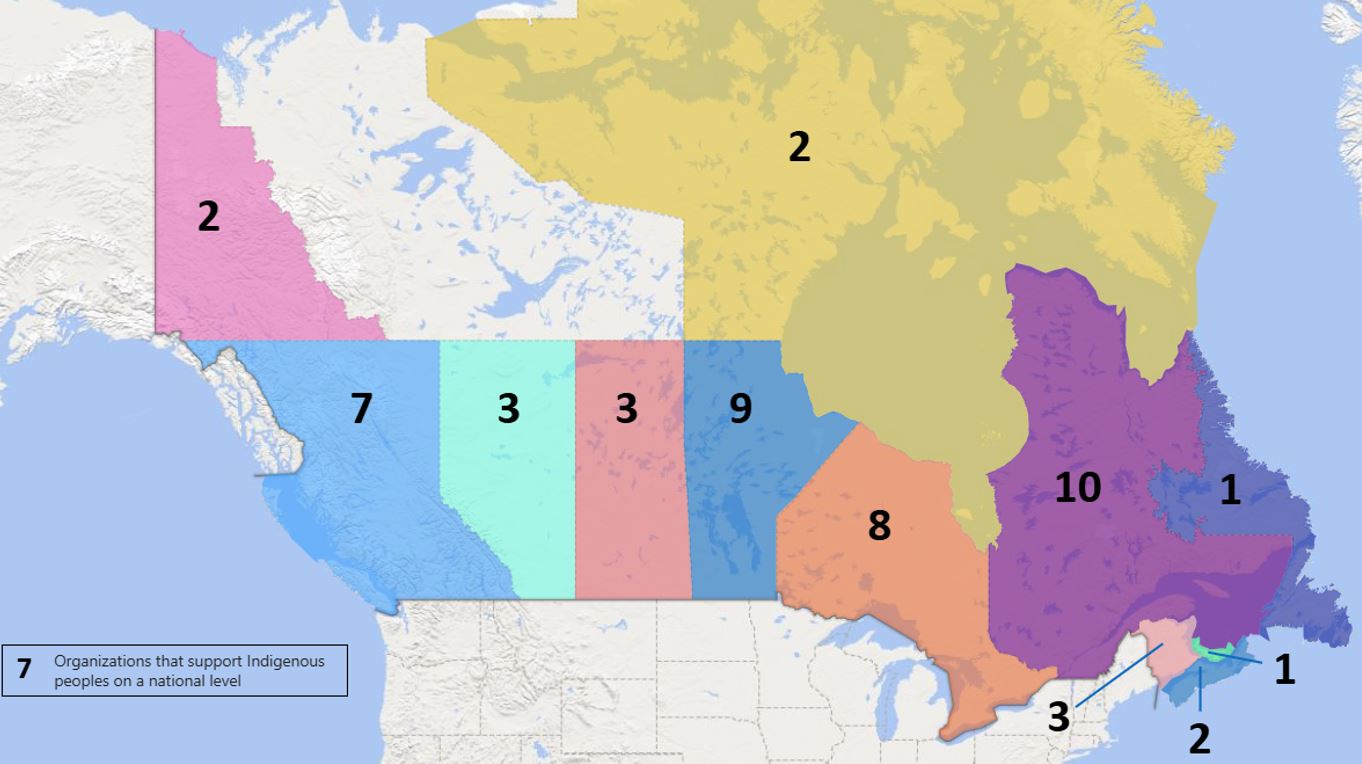
Distribution of submissions from Indigenous partners
Text version
This image shows a map of Canada and the regions where Indigenous partners provided input for the Annual Report. The number of submission Justice Canada received is indicated over each province or territory: British Columbia (7), Alberta (3), Saskatchewan (3), Manitoba (9), Ontario (8), Québec (10), New Brunswick (3), Prince Edward Island (2), Nova Scotia (1), Newfoundland and Labrador (1), Yukon (2), and Nunavut (2). The image also shows in a rectangle on the left hand side that the department received input from 7 organizations that support Indigenous peoples at the national level.
Department of Justice Canada
- Date modified: