
Findings
This section of the report synthesizes the evaluation findings. The analysis is based on information that emerged from all lines of evidence. It explores the relevance of the Centres, the effectiveness and efficiency of their mandates, service delivery models, and structure, and the strategic partnerships that support the work of their client departments and agencies. The degree to which Centres work collaboratively to provide timely, high-quality and consistent legal advice and policy work is also examined. An overview of the findings from each of the eight Centres as well as process maps that provide a description of their overall processes can be found in Appendix A.
4.1 Relevance
The Centres continue to meet a demonstrated need within Justice. They fulfill a valued role by providing expert legal advice in specific areas of the law that incorporates a whole-of-government perspective.
4.1.1 Continued Need of the Centres
The Centres continue to meet a demonstrated need within Justice. Key informants from all stakeholder groups9 agreed that having access to centralized groups of experts in specific areas of the law was valuable. The concentration of knowledge within the eight Centres was regarded as fundamental to obtaining high-quality and efficient legal advice for the multitude of legal questions that can arise. Given the broad nature of the Centres’ practice areas, it was noted among legal counsel within the Centres and stakeholders that it would be challenging and time consuming to maintain such a high-degree of expertise in all applicable aspects of the law outside of these Centres; therefore, having these centralized groups of experts addressed this potential gap. In addition, accessing the Centres was seen as particularly important for client departments and agencies with smaller LSUs where legal counsel may not have significant experience in specific areas of the law.
The Centres were seen as particularly important in ensuring that a consistent approach was being undertaken given legal advice provided to one client department or agency may also be applicable to the whole-of-government. As such, stakeholders indicated that they had confidence that Justice is speaking with one voice and that there was alignment with the broader government perspective. The legal counsel within the Centres are also in a position to support other Justice counsel and act as a resource for them to discuss questions or ideas that may not require a formal legal opinion. Moreover, the Centres have the ability to analyze and monitor trends, which can contribute to greater consistency and improved knowledge sharing. Some Centres supported ongoing or emerging government priorities through their contributions to policy development or legal advice, such as strengthening relationships with Indigenous communities, supporting initiatives related to safe, inclusive and respectful workplaces, advancing Canada’s Digital Charter and enhancing powers for the Privacy Commissioner to establish a new set of online rights, or modernizing the Official Languages Act. Given this, key informants emphasized how beneficial it is to be able to engage with the Centres regarding these key initiatives.
4.1.2 Ongoing Demand for Services
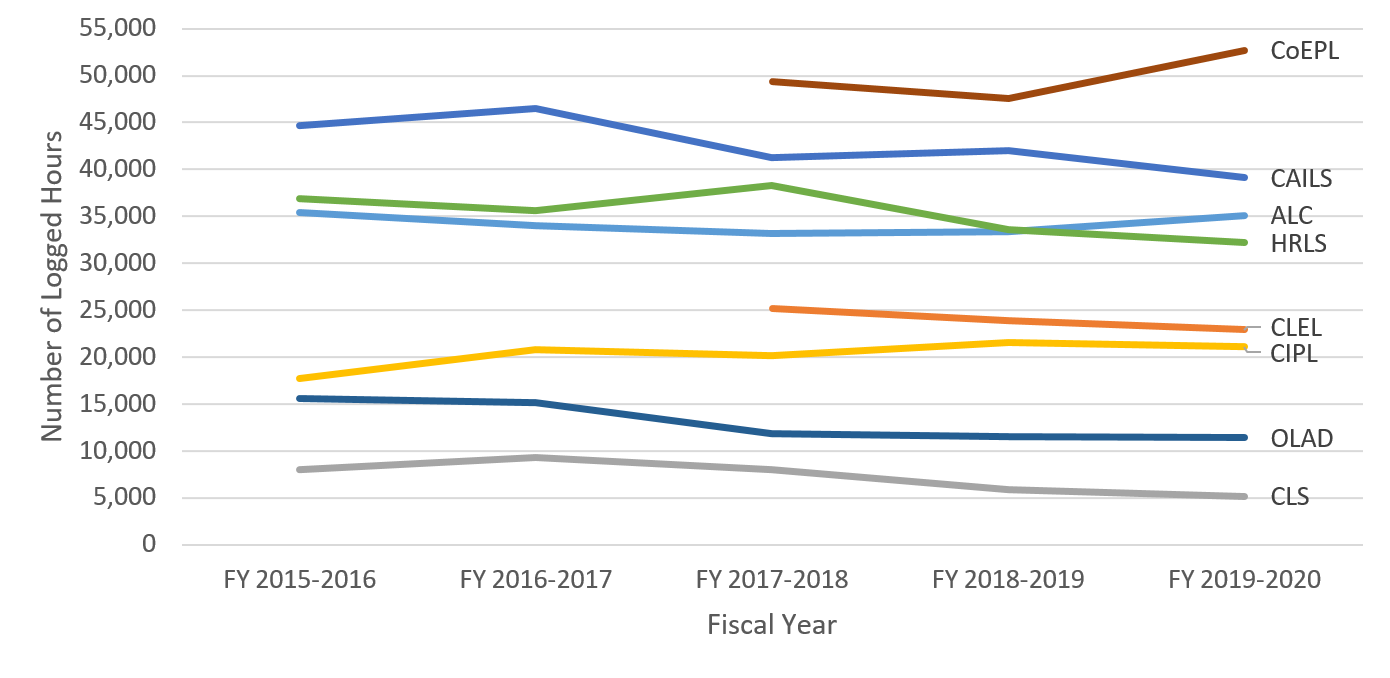
Evaluation findings confirm that there is an ongoing and continued demand for services offered by the Centres over the past five FYs. As shown in Figure 4, the number of logged hours for each Centre remained fairly constant over the evaluation period, demonstrating a continued demand for Centre work. Minor fluctuations in work over time appear to be largely related to overall Centre staffing and capacity levels. Although there is some variation across Centres, all Centres included work on a mix of low, medium, and high risk/complexity files.10,11
Figure 4: Number of logged hours, per Centre, FY 2015-2016 to FY 2019-2020
Text version
| Year | ALC | CLEL | CLS | CIPL | CAILS | HRLS | OLAD | CoEPL |
|---|---|---|---|---|---|---|---|---|
| FY 2015-2016 | 35,455 | 7,972 | 17,672 | 44,672 | 36,866 | 15,562 | ||
| FY 2016-2017 | 33,965 | 9,285 | 20,805 | 46,513 | 35,624 | 15,094 | ||
| FY 2017-2018 | 33,135 | 25,137 | 7,952 | 20,188 | 41,297 | 38,294 | 11,790 | 49,368 |
| FY 2018-2019 | 33,413 | 23,834 | 5,823 | 21,504 | 42,036 | 33,622 | 11,500 | 47,614 |
| FY 2019-2020 | 35,132 | 22,917 | 5,162 | 21,064 | 39,107 | 32,224 | 11,377 | 52,726 |
Note: The source of this data is iCASE/LEX.
4.2 Efficiency, Design, and Service Delivery
4.2.1 Clarity of Mandate
The mandates of the Centres are generally understood. However, there is a need for greater awareness and clarity with respect to the scope of services offered and guidance on when they should be engaged. There is an opportunity to explore a more centralized approach to defining and communicating these mandates to stakeholders to support a broader recognition and understanding of the Centres’ mandates as a whole.
Ensuring that the mandates of the Centres are widely known and understood by those within Justice and among all stakeholders allows the Centres to function according to their design and service delivery models. In practical terms, this means that all legal counsel within the Centres should be clear about the precise scope of the mandate of their respective Centre, and of the other Centres they may need to collaborate with. This also requires that legal counsel in LSUs, the NLS, and other areas within Justice have an understanding about the types of services these Centres can be expected to offer, which in turn will ensure that the Centres are appropriately engaged. Client departments and agencies, while they may ultimately engage directly with some of these Centres, may also often rely on their LSU to guide them in their initial contact with many of the Centres.
Evaluation findings indicate that there is a basic overall knowledge among stakeholders with respect to the mandate of the Centres. Some of these Centres (e.g., HRLS, CAILS, and OLAD) have been operating in their current structure for a longer period of time, and are well established within Justice, which helps facilitate awareness of their mandates among stakeholders. Even for more newly established Centres (e.g., CoEPL and CLEL), their mandates are communicated through various means, such as memos, newsletters, presentations, and internal emails, which assisted in promoting a greater understanding of their services, protocols, and processes.
Areas of Success
Several factors have facilitated the awareness and understanding of the Centres’ mandates among stakeholders as well as legal counsel within the Centres. These factors consist of:
- Outreach activities: Proactively engaging stakeholders through the distribution of memos, newsletters, and organizing various presentations and meetings (e.g., CLEL) helped to create awareness and a better understanding of the Centres’ mandates.
- Internal mentoring and support: Providing peer mentoring and training to new legal counsel that join a Centre (e.g., CLEL, CoEPL and OLAD) ensured that all team members acquired relevant knowledge regarding the scope of services offered by the Centres.
Challenges
While evaluation findings indicate that stakeholders among the eight Centres have a general understanding and awareness of the mandates; some challenges do exist, including:
- Lack of clarity: Stakeholders indicated that, while they may be generally aware of the Centres’ mandates in broad terms, the full scope of services remained somewhat unclear. This lack of clarity led stakeholders to sometimes engage with the Centres without knowing whether a request fell within the Centre’s mandate or not. This was perceived to lead to inefficiencies in the amount, timeliness, and appropriateness of requests received (e.g., questions sent to CIPL related to the application of solicitor-client privilege and Cabinet confidentiality outside the context of an ATIP request, etc.). In other instances, the lack of clarity resulted in hesitation to engage with the Centres at all. Other factors that led to difficulty in determining whether to engage with the Centres included:
- Interconnected practice areas: Depending on the request, there may be related practice areas that could link to the mandate of more than one Centre. This could occur, for example, with respect to procurement issues where questions may relate to the mandates of CLS or CoEPL, or between HRLS and CAILS for questions related to section 7 of the Charter (i.e., right to procedural fairness). In these circumstances, there may be uncertainty among stakeholders regarding who to contact when there is a legal question.
- Expertise also existed outside the Centre: In cases where it is discretionary to engage with a Centre, it may be difficult to determine who to engage when LSUs have the mandate to provide legal advice related to their client department or agency mandate (i.e., CLS providing expert legal advice in corporate law but Innovation, Science and Economic Development also advises on the Canada Business Corporations Act, as informed by client policy).
- Need for greater awareness: During the interviews, not all stakeholders from the eight Centres were aware of the specific mandate of the Centres, which was particularly evident in instances where the mandate of a Centre may have changed, for those legal counsel who do not regularly engage with a Centre, or for new legal counsel who joined a Centre.
Opportunity for improvement: While having a general understanding of the eight different mandates of the Centres was helpful, evaluation findings confirmed the need to strengthen that understanding. Throughout the interviews, stakeholders emphasized the importance of better communicating the type and extent of services provided, including examples of appropriate requests, so they can be more confident about when to engage with the Centres when a need is identified. In order to obtain information about Centre mandates, LSUs currently have access to Centre information that may be available in various formats and locations. The individual Centres, at this point, are providing information in silos, which does not allow legal counsel to build a detailed understanding of the services offered by each Centre.
To address this, a more coordinated or centralized approach could be adopted among the Centres in defining and communicating their mandates to stakeholders. There is an opportunity to respond to stakeholder needs by exploring various information management and outreach approaches, such as having a centralized location with key information about the Centres as well as outreach activities (e.g., information sessions), which would allow legal counsel to have open dialogue with the Centres to further build awareness and address any confusion.
Good practices
Ensuring there is a framework in place that supports knowledge development and raises awareness of the Centres’ mandates among stakeholders and legal counsel within the Centres is seen as a key approach to understanding the type and extent of services that can be offered. Outreach activities:
- The CLEL provides an example of exemplary outreach to its various stakeholders. When CLEL was established in FY 2017-2018, it was important to proactively engage with senior officials in client departments and agencies and LSUs to create an awareness of the Centre’s mandate and the scope of services offered and regularly seek feedback. Over the past couple FYs, management from CLEL have identified specific training needs from stakeholders and provided over 50 information/training sessions, and also identified emerging issues and trends in their area of expertise.
4.2.2 Service Delivery Models
Given their mandates, structures, and priorities, Centres have implemented their own unique service delivery models and processes to guide their work. All models offer some specific successes as well as challenges to the operation of the Centres. Irrespective of the particular model, having clear protocols and processes that were effectively communicated was helpful in enhancing opportunities for meaningful engagement and interactions among all key stakeholders.
Each of the Centres has their own set of protocols and processes that support their ongoing activities and operations. Although there are a number of similarities, there are also some differences in terms of the Centres’ overall service delivery models. The sub-sections below describe several common aspects of these service delivery models, along with the degree to which the models are successful in helping Centres to complete their work, any challenges, opportunities for improvement, and/or good practices that have emerged from the overall experience of the eight Centres.
4.2.2.1 Formal Protocols
Four Centres (CIPL, CLEL, CoEPL, and OLAD) have established formal protocols that guide how their respective stakeholders should engage with them for the provision of legal advice (see box 4a of the process maps for these Centres in Appendix A). Although the content varies, these documents typically describe the vision and the precise mandate of the Centres and include some or all of the following details: the process to submit a request; the expected products; the distribution of roles and responsibilities; any exceptions to the mandate; the timekeeping guidelines; the file management process; and the Centre’s service standards.
Areas of Success
Although several Centres worked effectively without a formal protocol, and many stakeholders appreciated the flexibility of the informal approach, there was also support for the establishment of a formal protocol. Stakeholders identified the following benefit to having a formal protocol as part of the Centres’ service delivery model:
- Supports awareness of how to engage with the Centres: Having a formal protocol in place was seen as an important mechanism of communicating and raising awareness of the Centres’ mandates, roles and responsibilities, and processes in how to engage with the Centres to request legal advice. This can be particularly helpful for new legal counsel who join a Centre, or for those who may not regularly engage with a Centre as it helps guide their understanding of the types of services offered and of the service delivery model.
Challenges
Although many aspects of having a formal protocol were seen as effective, evaluation findings indicate that some challenges exist, including:
- Adherence to formal protocol: Even though formal protocols have been established for CIPL, CLEL, CoEPL, and OLAD, there is evidence to suggest that some stakeholders are not always following established processes. This may occur for Centres with an exclusive mandate to deliver legal advisory services (i.e., CLEL, CoEPL, and OLAD), where client departments and agencies engage their LSUs for legal advice instead of the Centre. This can be attributed to a lack of awareness of the formal protocol or due to pre-existing relationships with legal counsel in LSUs. Similarly, the OLAD is responsible to coordinate the position of the Attorney General concerning any official language issues raised during litigation, but this process is not always followed by NLS legal counsel according to the protocol.
- Clarity of formal protocol: There is also a need to clarify the division of roles and responsibilities among some stakeholders working with CIPL, CLEL, CoEPL, and OLAD given it is not always clear who is responsible for certain tasks. For instance, in the case of the CLEL, the Centre shifted from having a shared role in litigation support to providing full litigation support in the majority of cases. While this was communicated to legal counsel identified in the NLS and relevant LSUs for awareness, some confusion remained among LSU, NLS, and Centre legal counsel over who is responsible for certain processes related to litigation files.
Opportunity for improvement: Promoting greater adherence to the formal protocols was identified by CIPL, CLEL, CoEPL and OLAD as one approach to improve the functioning of these Centres. To achieve this, clarifying roles and respsonsibilities (e.g., how ATIP designated counsel should be engaging with the CIPL) would be helpful. Other suggestions included providing additional information to stakeholders to clarify certain processes to support efficient Centre activities (e.g., clarifying the request form in the case of CoEPL; sending a memo from OLAD senior managers to NLS legal counsel regarding processes related to litigation; or clarifying the roles between LSU, NLS and CLEL legal counsel in matters of litigation).
4.2.2.2 Exclusive Mandate
Three Centres (CLEL, CoEPL, and OLAD) have an exclusive mandate to provide legal advisory services in specific areas of the law. Therefore, when it is determined that there is a need for legal advice, these three Centres are the designated service providers on matters related to labour and employment, procurement and official languages law matters, barring specific exceptions for certain client departments and agencies (see box 3 of the process maps for these Centres in Appendix A).
Areas of Success
There are several benefits to having an exclusive mandate as part of the service delivery model, of CLEL, CoEPL and OLAD, such as:
- Consistency: An exclusive mandate was found to support the goal of ensuring an integrated and consistent approach is being undertaken in all matters related to labour and employment, procurement, and official languages law.
- Whole-of-Justice perspective: Having an exclusive mandate was noted as being valuable among legal counsel within the Centres in facilitating the development of whole-of-Justice perspectives given legal counsel are aware of all trends and issues arising that may have implications across client departments and agencies.
- Centralized expertise: An exclusive mandate helped to avoid having each LSU build and maintain the required expertise to adequately address issues related to labour and employment, procurement, and official languages law.
Challenges
Although many aspects of having an exclusive mandate were seen as effective, evaluation findings indicate that some challenges exist, including:
- Inefficient process: Depending on the specific client department or agency, the expertise of LSU legal counsel, and the degree of risk and complexity of the legal question being asked, stakeholders working with the CLEL, CoEPL or OLAD may perceive engaging with the three Centres to be an unnecessary step. For instance, in the context of a low risk and complexity question, if an LSU is viewed as having enough expertise to deal with the legal issue themselves, engaging with the Centres for legal advice was, at times, viewed as resulting in delays.12
- Limits development of expertise among other legal counsel: Having an exclusive mandate was noted as limiting the engagement of other Justice counsel in that particular area of the law. For example, knowing that legal questions related to official languages will be addressed by OLAD, LSU legal counsel tended to focus on other areas of practice and may disengage with official languages matters.
Opportunity for improvement: It may be possible to explore opportunities to engage or brief Justice counsel on legal advice provided to clients, where feasible, in the context of the exclusive mandate of the Centres.
4.2.2.3 Direct Relationship with Client Departments and Agencies
Three Centres (CLEL, CoEPL, and OLAD) directly provide legal advice to client departments and agencies in the areas of law covered by their mandates (see box 10 of the process maps for these Centres in Appendix A). When it is determined that there is a need for legal advice, a legal counsel from the LSU assigned to a client department or agency assists in making the initial request for legal advice, with the exception of CLEL where client departments and agencies typically contact the Centre directly. LSU counsel are kept informed at key stages of the legal advisory process; however, the interactions mainly occur between these Centres and the client departments and agencies. LSUs are generally provided with a degree of information on the files (e.g., being copied on the response or through briefings or other discussions, if required).
Areas of Success
There are several benefits to having a direct relationship with client departments and agencies as part of the service delivery model of CLEL, CoEPL and OLAD, such as:
- Knowledge of client context: This service delivery model allows the Centres to have an increased awareness of client departments’ or agencies’ organizational context and the current realities being faced. This knowledge provides the Centres legal counsel with the flexibility to tailor their approach to the specific circumstances of the client department or agency it supports and actively engage with them to support their decision-making processes (e.g., the Official Languages Law Team and the CLEL work directly with client departments and agencies to prepare and communicate legal advice, while keeping the LSU counsel informed). This is seen as particularly rewarding among legal counsel within these Centres as it allows them to experience first-hand the contribution they are making. In the case of the Official Languages Law Team, it was indicated during interviews that they appreciated the opportunity to work directly with client departments and agencies.
- Strong working relationships: This service delivery model creates the opportunity for more open discussions with client departments and agencies, and allows trust to be built through these ongoing interactions. Client departments and agencies working with CLEL indicated that having direct access to legal counsel permitted greater engagement. The LSU counsel also noted being generally satisfied with the direct relationship between the Centres and client departments and agencies, particularly when they are kept sufficiently informed on large or complex files.
Challenges
Although many aspects of having a direct relationship with client departments and agencies were seen as effective, evaluation findings indicate that some challenges exist, including:
- Adherence to protocols: Client departments and agencies and LSUs may not always adhere to protocol, as it appears that some LSUs continue to provide legal advice instead of engaging with the Centre (e.g., CoEPL). As such, legal counsel within the Centres may not be aware of all of the legal advice provided within their practice areas to ensure consistency and a whole-of-government approach.
- Limits expertise: The ability of legal counsel within LSUs to develop expertise and knowledge in these specific areas of the law is limited due to the Centres direct relationship with client departments and agencies. For example, LSU legal counsel are no longer developing expertise in labour and employment law due to CLEL’s direct relationship with client departments and agencies.
- Limits engagement: Some LSUs perceived the current process as being largely transactional, with few opportunities to have meaningful engagement, and indicated that they would appreciate more meaningful involvement throughout the process of a request and after the legal advice is provided to client departments and agencies.
Opportunity for improvement: Clarifying the roles and responsibilities of LSUs, client departments and agencies, and the Centres and ensuring clear communication of these roles with stakeholders would improve adherence to protocol. As well, sharing information between Centres and LSUs on specific files, or supporting other strategic engagements would better inform legal counsel of issues being faced by client departments or agencies. For example, some LSU counsel and client departments and agencies may not be fully aware of or utilize opportunities to seek clarifications directly from the CoEPL, leading representatives from client departments and agencies to engage with LSU counsel to seek clarification or to ensure their understanding of the legal advice.
4.2.2.4 Discretionary Engagement with Centres
An exclusive mandate may not always be feasible or realistic, based on the area of the law and the degree to which the legal issues are embedded in the context of the day-to-day work of LSUs. Engaging with the ALC, CAILS, CIPL, CLS, and HRLS is at the discretion of legal counsel in LSUs, the NLS, and other areas within Justice (see box 3 of the process maps in Appendix A). As such, these stakeholders remain the lead on their files and engage with the Centres when it is determined that there is a need for legal advice. In this context, limited or no interaction is expected to occur between these Centres and client departments and agencies.
Areas of Success
There are several benefits to having discretionary engagement as part of the service delivery model of ALC, CAILS, CIPL, CLS and HRLS, such as:
- Supports flexibility: Having the flexibility to engage with the Centres was noted as a strength for the ALC, CIPL and HRLS, given it provides LSUs with the opportunity to respond to requests and/or engage with the Centres for review of their legal opinions. This can help reduce the workload of the Centres and assist in meeting established timeframes, resulting in efficiencies. For instance, this was illustrated in the case of ATIP designated counsel who are able to respond to requests of lower risk and complexity and engage with the CIPL when requests are outside of their expertise, are of higher risk and complexity, or to review draft legal opinions. This is intended to reduce the workload of the CIPL legal counsel and to allow them to focus on addressing complex ATIA and PA issues and developing knowledge management products.
- Knowledge transfer: The ALC, CIPL, CLS, and HRLS all noted the value of legal counsel within LSUs being able to develop their own level of expertise in specific areas of the law and building their capacity. For example, if a LSU counsel has engaged with the HRLS on a number of occasions for a similar or reoccurring issue, that legal counsel may develop a draft of the legal advice themselves and send it to the HRLS for review.
- Knowledge of client context: LSU counsel generally have a strong working knowledge of the context and priorities of their client departments and agencies. For example, LSU counsel working with CAILS indicated that they are able to act as the link between the Centre and client department and agency to ensure that the legal advice fully considers the clients’ specific context and realities.
Challenges
Although many aspects of having discretionary engagement were seen as effective, evaluation findings indicate that some challenges exist, including:
- Determining whether to engage the Centres: Stakeholders working with the ALC, CIPL and CAILS noted that there are times when it is unclear whether the Centres should be contacted on certain files. In addition, stakeholders indicated that in some cases it becomes functionally mandatory to engage with the ALC, CIPL, and CAILS when it relates to specific work. For example, when developing policy with significant constitutional implications (e.g., CAILS), or when there are larger files that could be considered sensitive in nature.
- Timing of engagement: In some cases, there may be uncertainty about when to engage with the Centre, which can result in stakeholders reaching out quite late in the process (e.g., related to litigation or legal advice files for ALC), which may result in inefficiencies and delays in receiving legal advice.
Opportunity for improvement: Additional communication regarding the protocol and the roles and responsibilities of LSUs, client departments and agencies and the Centres was suggested by ALC and CIPL as one approach to improve the functioning of the Centres. Moreover, CAILS and CIPL noted that the Centres could also clarify when it would be beneficial to engage with the Centres, including specific examples of when it would be appropriate to consult with them on certain files.
4.2.2.5 Designated Counsel
Three Centres (CIPL, CLEL, OLAD) assign each of its legal counsel to a client department or agency portfolio. This type of service delivery model provides stakeholders with the knowledge of who should specifically be engaged when it is determined that there is a need for legal advice. In the specific case of the CIPL, each LSU and NLS Region has an ATIP designated counsel who is responsible for the provision of legal advice in their unit, and who is paired with a CIPL counsel as well as with a back-up CIPL counsel. Therefore, when a legal question arises, ATIP designated counsel should receive the request first and if the request falls outside of the counsel’s expertise, it is then sent to the CIPL counsel to be addressed.
Areas of Success
There are several benefits to having a designated counsel as part of the service delivery model of CIPL, CLEL and OLAD, such as:
- Awareness of who to engage: The process of who to engage at the CIPL, CLEL and OLAD is clear to stakeholders when a legal question arises, given that a contact list has been developed pairing stakeholders with designated counsel within these Centres. This, in turn, allows stakeholders the opportunity to build stronger working relationships with their designated counsel given their ongoing interactions.
- Continuity of service: Having a designated counsel increases their awareness if a similar question has already been addressed by the assigned client department or agency allowing for greater consistency. Also, if the designated counsel is on leave, legal counsel who are assigned as backups to the client department or agency portfolio are familiar enough with the issues being faced by the particular client department or agency to be able to provide support.
- Knowledge of client context: Having designated counsel allows for the development and concentration of expertise within the Centres. For example, this structure allows the OLAD and CLEL counsel to develop specific knowledge of the client departments or agencies, which results in practical legal advice that takes into consideration the client context.
Challenges
Although many aspects of having designated counsel were seen as effective, evaluation findings indicate that some challenges exist among some Centres, including:
- Limits expertise: In the case of OLAD, legal counsel within the Centre noted that working solely with their assigned client department or agency can limit their experience and knowledge to that specific client department or agency. This may cause an overspecialization in specific issues being faced by that client department or agency instead of being involved in a variety of different types of files.
- Engagement of ATIP designated counsel in LSUs: For CIPL, when ATIP designated counsel in LSUs are overworked, unavailable, or do not have the required experience for the position, the process can be inefficient. For example, if ATIP designated counsel in LSUs are unable to respond to lower complexity requests for these reasons, this may lead to having a greater reliance on legal counsel within the CIPL to respond to requests that should be handled by the ATIP designated counsel themselves.
Opportunity for improvement: In order to support broader learning experiences and interests, one suggestion from OLAD legal counsel was implementing a rotation for designated counsel among different client department and agency portfolios, where possible. In addition, there may be an opportunity for the CIPL to conduct additional outreach to LSU managers and designated ATIP counsel to increase awareness of the roles and responsibilities of an ATIP designated counsel as well as guidelines that LSUs could consider when selecting ATIP designated counsel (e.g., through information sessions or a brief document).
Good practices
There are some identified strengths with the various protocols and processes implemented within the eight Centres, that have contributed to their successful functioning, including:
Formal protocol:
- Stakeholders emphasized the benefits of having a formal protocol in place, like in the case of OLAD, CoEPL, CLEL, and CIPL, as they were aware of with whom they should engage at the Centre, who the back-up legal counsel is on the file, and were provided with information regarding the mandate and roles and responsibilities. The protocol offered a clear structure that helped guide stakeholders when a need for legal advice was identified.
Designated counsel:
- Having designated counsel assigned to provide services for specific client departments and agencies was seen as contributing to continuity of service and building an understanding of client departments and agencies context and developing designated counsel expertise (e.g., CIPL). In addition, the OLAD has implemented a two-year rotation of legal counsel assigned to client departments and agencies so they can continue to broaden their experience, and avoid having an overspecialization. CLEL also regularly assesses client assignments based on workload, professional interest, and development in various areas. By implementing these processes, the Centres achieve a balance between maintaining a stable link with client departments and agencies, while also providing opportunities for the legal counsel to expand their experiences.
Quality assurance process:
- To ensure high-quality legal advice is provided to various stakeholders, all Centres have implemented quality assurance processes, to various extents, to support consistency and comprehensiveness (see box 12b of the process maps in Appendix A). Some examples include:
- The CLEL has established a formal quality assurance process whereby senior counsel (i.e., LP03s) are responsible for coordinating requests for legal advice to legal counsel within the Centre and conducting a peer review of drafted legal advice. In addition, other legal counsel within the CLEL with experience in a particular area of law may also regularly perform a peer review of draft legal advice. Moreover, CLEL management may review specific opinions as well as all cross-government products.
- The HRLS has implemented an effective quality assurance process, particularly for new or junior legal counsel, which ensures that draft legal advice is reviewed by a senior HRLS legal counsel and then HRLS management, typically for a period of six months. In addition, for all requests that involve matters with significant legal risk, a senior legal counsel or HRLS manager will review.
Despite the specific protocol or processes that all Centres have implemented to facilitate their functioning, one of the most important factors that needs to be considered is how information is communicated to each Centre’s stakeholders (e.g., whether through a formal protocol or more informally). Another important factor is the degree of awareness stakeholders have with respect to each Centre’s mandate, roles, responsibilities, and processes. Establishing effective information and communication practices (e.g., through outreach activities like presentations, or training sessions) enables the Centres to create an awareness of the structure in which they operate and an understanding of the services they can provide.
4.2.3 Structure
The human resources and staffing models currently in place are functioning well and generally support day-to-day work processes of the Centres. Although both A-Base and cost-recovery funding models had some advantages, some challenges were identified. Several Centres had experienced changes in mandate that had impacted workload without any changes to Centres’ A-Base resources, resulting in workload pressures. The cost-recovery model also resulted in challenges to adequately fund certain aspects of some Centres’ mandates (e.g., billing for knowledge management activities and products distributed to multiple departments).
4.2.3.1 Human Resources and Staffing Models
The evaluation focused on two dimensions of the structure of the Centres: human resources and staffing models and financial models.
Areas of Success
Building and maintaining a team of experts in highly specialized areas of the law is an inherently challenging process. Finding legal counsel with the right skills and expertise, allowing them to acquire advanced knowledge as experts, and supporting their continuing progression remains a priority for all Centres. Evaluation findings indicate that the following factors support an effective internal structure:
- Stability: Maintaining stability within both the team and the management of the Centres was often mentioned during interviews as being a particularly important factor. Among other things, it greatly facilitates the process of integrating new legal counsel and maintaining the corporate knowledge and experience of the Centres.
- Mentorship: Mentorship opportunities are seen as being equally important. During interviews, legal counsel within the Centres repeatedly emphasized the benefits of creating formal and informal mentorship opportunities.
- Paralegals: Having the support of paralegals, whenever possible, was identified as a significant addition to the complement of legal counsel in the Centres. These individuals can provide support at various stages of the legal advisory work process, from the intake of new requests, to undertaking research activities, and supporting information management and knowledge sharing.
Challenges
Although there are several factors that contribute to a successful internal structure, evaluation findings indicate some challenges, such as:
- Recruitment and retention: Having highly qualified personnel is important for Centres in order to provide expertise in the various areas of practice that fall within their mandates. Evaluation findings indicated that some Centres reported challenges in recruiting new legal counsel, particularly individuals with existing expertise in particular areas of the law. When turnover occurs within the Centres, this can create pressure on other legal counsel to train and mentor new recruits who may not have the background to work independently, which could also impact work assignments. This was particularly evident when there were limited resources within a Centre with a broad mandate to fulfil. This, in turn, may limit the ability of these legal counsel to engage in knowledge management, professional development, or outreach activities. Some Centres also suggested that retention could be an issue given their size and structure. As legal counsel in the Centres become experts in their respective areas of the law, they may be faced with limited advancement opportunities, given that many Centres are relatively small units with limited positions at more senior levels.
-
Capacity: Issues of capacity were also raised for several Centres. CLS is the smallest of the Centres with a total of approximately five FTEs in FY 2019-2020. Several stakeholders identified the reduction in the number of staff in the CLS practice areas (in particular in IP since the absorption of the IP Secretariat in the CLS) as an area of concern. This was seen as hindering the Centre’s ability to fulfill its mandate, such as regularly producing new reference materials and updating tools and templates. In addition, some CLS counsel noted that there was uncertainty about the types of questions that the Centre could address because of the resource constraints. Furthermore, both recruitment and retention are thought to be impacted by the limited number of opportunities for advancement in the Centre, as there are few senior positions given its size and structure.
Evaluation findings also indicated that there was a need to divert internal resources within some Centres to address the influx of work associated with their newly expanded mandates. For instance, this has been the case for the ALC, which has experienced an increase in demand with respect to policy work (e.g., administration of justice negotiations and UNDRIP) stemming from the Minister of Justice’s mandate letter as well as new ministerial priorities. Capacity issues were raised for HRLS as well, given the new obligation to develop Charter Statements upon the introduction of a new bill as part of their mandate. In addition, the CIPL has taken an increasingly larger role in policy work through their review of the PA.
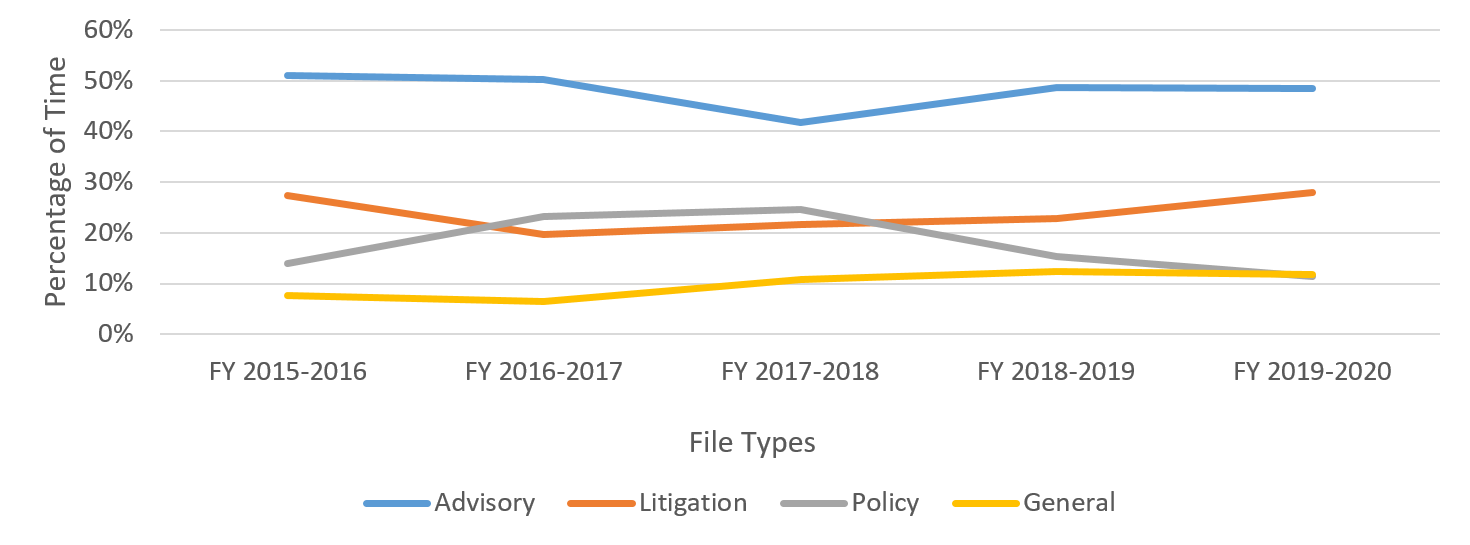
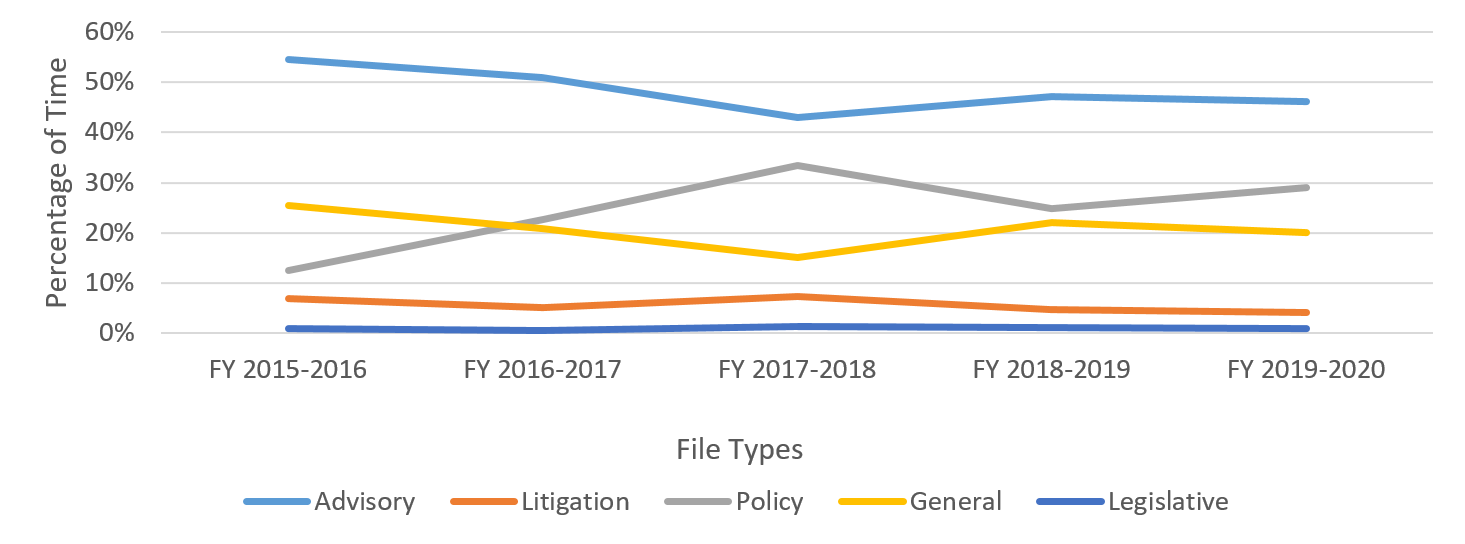
Figure 5, 6 and 7 demonstrates some of the fluctuations in work experienced by the Centres. As can be seen, HRLS and CIPL have both experienced fluctuations in the level of policy work over time, with corresponding increases or decreases in other types of work, commonly advisory or general (including knowledge management) (see Figure 5 and 6). ALC has also experienced an increase in policy work over time, although ALC has indicated that some of this work may have been reflected as advisory in iCASE/LEX and will show as such in Figure 7. When there are fluctuations in one type of work that must be addressed within the same overall level of capacity for the Centres, the ability to fully support all other types of work can be impacted. This can make it challenging for Centres to adequately deliver on all aspects of their mandate.
Figure 5: HRLS percentage of hours logged by file type, FY 2015-2016 to FY 2019-2020
Text version
| File Type | FY 2015-2016 | FY 2016-2017 | FY 2017-2018 | FY 2018-2019 | FY 2019-2020 |
|---|---|---|---|---|---|
| Advisory | 51% | 50% | 42% | 49% | 49% |
| Litigation | 27% | 20% | 22% | 23% | 28% |
| Policy | 14% | 23% | 25% | 15% | 11% |
| General | 8% | 6% | 11% | 12% | 12% |
| Legislative | 0% | 0% | 1% | 1% | 0% |
| Total | 100% | 100% | 100% | 100% | 100% |
Notes:
- Legislative work in Figure 5 (usually legal advice in the context of legislative work) accounts for 0.48% of the HRLS’s time and has not been reflected in the analysis.
- The source of this data is iCASE/LEX.
Figure 6: CIPL percentage of hours logged by file type, FY 2015-2016 to FY 2019-2020
Text version
| File Type | FY 2015-2016 | FY 2016-2017 | FY 2017-2018 | FY 2018-2019 | FY 2019-2020 |
|---|---|---|---|---|---|
| Advisory | 55% | 51% | 43% | 47% | 46% |
| Litigation | 7% | 5% | 7% | 5% | 4% |
| Policy | 12% | 23% | 33% | 25% | 29% |
| General | 25% | 21% | 15% | 22% | 20% |
| Legislative | 1% | 1% | 1% | 1% | 1% |
| Total | 100% | 100% | 100% | 100% | 100% |
Notes:
- Policy work may be underrepresented in Figure 6 due to variation in timekeeping practices among CIPL counsel. Depending on the individual file certain policy work may have been recorded to advisory or general categories.
- The source of this data is iCASE/LEX.
Figure 7: ALC percentage of hours logged by file type, FY 2015- 2016 to FY 2019-2020

Text version
| FY 2015-2016 | FY 2016-2017 | FY 2017-2018 | FY 2018-2019 | FY 2019-2020 | |
|---|---|---|---|---|---|
| Advisory | 37% | 44% | 52% | 71% | 66% |
| Litigation | 54% | 50% | 40% | 21% | 16% |
| Policy | 1% | 1% | 3% | 1% | 4% |
| General | 8% | 4% | 5% | 7% | 13% |
| Legislative | 0% | 0% | 0% | 0% | 0% |
| Total | 100% | 100% | 100% | 100% | 100% |
Notes:
- Policy work may be underrepresented in Figure 7 due to variation in timekeeping practices among ALC counsel. Depending on the individual file certain policy work may have been recorded to the advisory category.
- Legislative work (usually legal advice in the context of legislative work) accounts for 0.2% of the ALC’s time and has not been reflected in Figure 7.
- The source of this data is iCASE/LEX.
In summary, several Centres have experienced changes in mandate or fluctuations in various types of work over the last FY. Although these Centres are managing the increased demand for these new initiatives, this has created some additional pressure on internal resources, when there has been no corresponding adjustment in resources. Assessing the capacity of the Centres to adequately fulfill their mandates, particularly when there are additional demands placed on them would support the effective planning of overall human resources required to complete Centre work.
Good practices
Several Centres engaged paralegals to support efficient distribution of work within the Centres and supported new or junior legal counsel through mentorship activities.
Paralegals:
- Paralegals from the CoEPL review the request form first to ensure that the issue falls within the mandate of the Centre. If so, they then determine if there are any gaps in information or points of clarification in the requests that should be addressed prior to the files being assigned to a CoEPL counsel. These measures have been implemented to support efficient processing of requests internally.
- CLEL also has a senior paralegal who assists by conducting research, knowledge sharing, organizing SharePoint with respect to issues and trends, and preparing summaries of key decisions for LSU heads.
Mentoring and support:
- To support legal counsel, the CLEL, CoEPL and OLAD have implemented peer mentoring processes that equip legal counsel with the tools needed to understand the Centre’s mandate and the opportunity to learn first-hand from experienced senior counsel. For example, new legal counsel to CoEPL are paired with a senior counsel which allows them to have access to a senior member of the team who can guide them in understanding the mandate, answer their questions, and act as a resource person. In addition, new legal counsel are provided with key information about the Centre when they arrive, such as documents that outline the mandate and roles and responsibilities.
4.2.3.2 Financial Models
Two Centres (CLEL and CoEPL) operate using a cost-recovery model. All other Centres operate with A-Base funding.
A-Base Funding
Evaluation findings indicate that the Centres (i.e., ALC, HRLS, CIPL, CLS, and OLAD) operating with A-Base funding are satisfied with this model. More than anything else, it removes any potential disincentives on the part of client departments and agencies to authorize the engagement of the Centres. Moreover, legal counsel within the Centres operating with A-Base funding do not face restrictions based on a limited budget allocated by a client department or agency to complete their work.
Despite its advantages, this funding model also comes with limitations. During interviews, it was noted that A-Base allocations may not adequately cover the full range of activities undertaken by the Centres. A-Base funding makes it more challenging to manage sudden fluctuations in workload and any increase in resources to manage this workload can result in financial pressures for Justice. In particular, policy work is, at times, difficult to forecast, and may end up being only partially covered by the A-Base allocation. Finally, the allocation of resources may only leave limited opportunities to undertake knowledge sharing activities.
Cost-Recovery Model
As of the final year of the evaluation period (FY 2019-2020), only CLEL and CoEPL operated using a cost-recovery model. The advantage of the cost-recovery model is its inherent ability to adapt to the demand placed on CLEL and CoEPL for legal advisory services provided to client departments or other areas of Justice (e.g., LSUs and NLS). If the model is operating as intended, it allows CLEL and CoEPL to grow or reduce its size to continuously adapt to the fluctuations on the demand for service. In addition, an increase in resources and salaries for CLEL and CoEPL generates additional revenues for Justice, as opposed to the other Centres for which an increase in resources constitutes a financial pressure.
There are, however, limitations to this model:
First, since client departments and agencies have to pay for the services offered by a cost-recovery Centre, they may have reservations about the need to seek such services. This is particularly significant since both CLEL and CoEPL operating on a cost-recovery basis also have the exclusive mandate to deliver advice in the areas of the law covered by their mandate. During interviews, it was noted that some client departments and agencies may hesitate to seek legal advice as a result of the associated costs, or may first turn to their assigned LSU to obtain this legal advice, particularly when it involves legal issues that have low levels of complexity and risks. In addition, this may lead LSU legal counsel to request that an amount of time can be spent on any particular advice in order to reduce costs from a cost-recovery Centre. This can limit the ability of the Centre counsel to provide fulsome advice on this issue. Furthermore, the cost-recovery funding model was found to be particularly inefficient when dealing with very simple, quick requests, and the administrative and reporting burden on the CLEL counsel can occasionally take longer than the provision of legal advice.
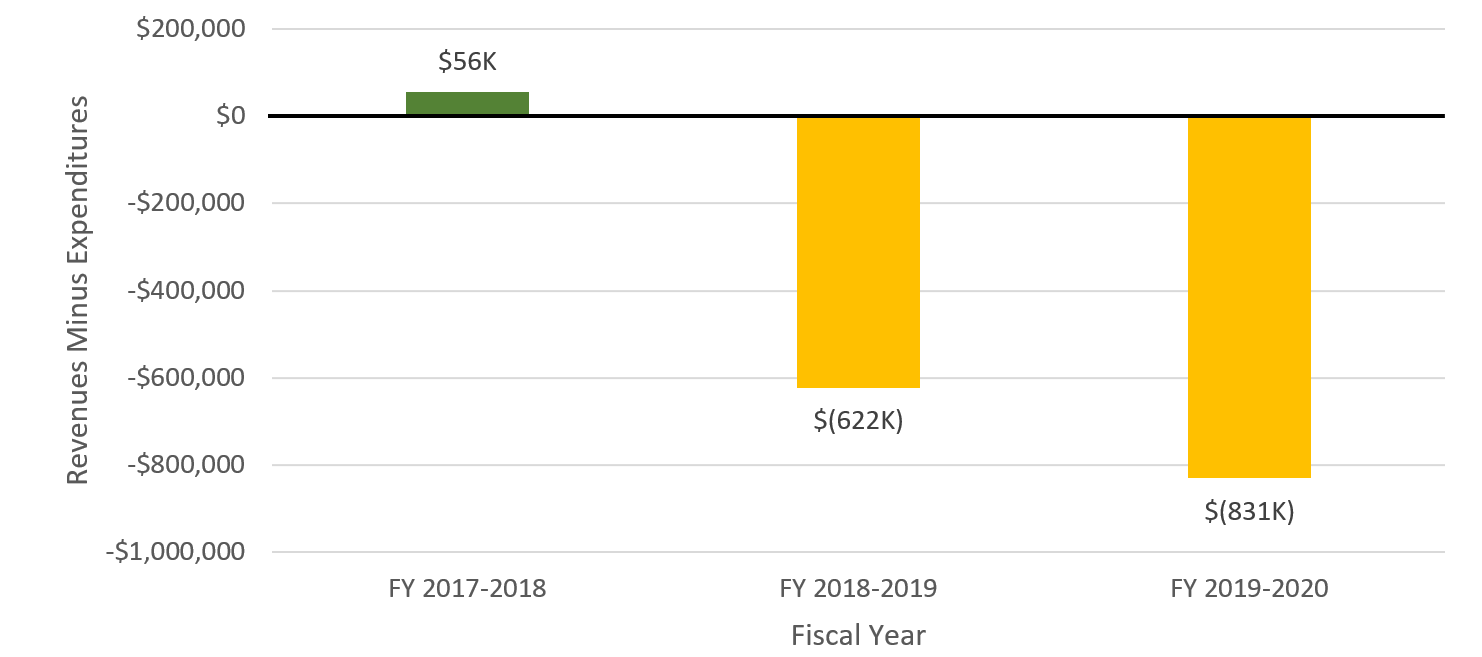
A second challenge is that the cost-recovery model operates on the assumption that all activities undertaken lend themselves to being cost-recovered. In practical terms, this is hardly the case. As noted during interviews, professional development activities required to maintain the expertise of the Centres as well as knowledge-sharing activities that Centres undertake to share with multiple clients are very difficult, if not impossible, to invoice. This issue was identified as a challenge for CLEL. As a result of multiple knowledge management activities that CLEL conducts that are of benefit to many clients, CLEL has experienced challenges in billing for these activities. However, as time goes by, CLEL has become increasingly proactive in anticipating issues and trends before they materialize, and working on matters that involve all client departments and agencies, which explains the trend identified in Figure 8 that CLEL hours are increasingly not being cost-recovered. As can be seen in Figure 8, expenditures have exceeded revenues for the past two FYs by approximately $600,000 and $800,000, respectively. The FY in which revenues exceeded expenditures is shown in green, while FYs in which expenditures exceeded revenues are shown in yellow. This revenue gap is absorbed by Justice, but is not likely sustainable in the long term if the gap continues to grow.
Figure 8: CLEL difference between revenues and expenditures, FY 2017-2018 to FY 2019-2020
Text version
| FY 2017-2018 | FY 2018-2019 | FY 2019-2020 | |
|---|---|---|---|
| Revenue minus Expenditures | $ 56,382 | $ (622,987) | $ (831,367) |
Note: The source of this data is IFMS.
Evaluation findings indicated that both A-Base and cost-recovery funding models have strengths and weaknesses. Depending on the Centres’ nature and level of work, likelihood of fluctuations in types of work over time and the corresponding workload pressures, different models may work better for some Centres than others. Based on evidence from the evaluation, several Centres (i.e., CLEL, ALC, CIPL, HRLS, and CLS) are experiencing challenges in managing workload and in fully delivering on their mandates under their current resource levels and funding models.
4.3 Effectiveness
4.3.1 Timeliness, Consistency, and Quality
The Centres deliver high-quality and consistent legal advice. Legal advice is generally timely, but can be impacted by the Centres’ overall capacity and resources. The Centres conduct policy work, as applicable, and provide a range of knowledge sharing activities that are valued by stakeholders.
Ultimately, the Centres are expected to deliver high-quality, consistent and timely legal advice. They are also engaged in providing other forms of support that enhances the capacity of Justice and supports a whole-of-government approach to decision making. This sub-section summarizes the findings that emerged from the evaluation as to the extent to which the Centres are achieving these expected results, and any lessons learned that have emerged.
4.3.1.1 Legal Advice
Providing legal advice, including legal policy advice, is at the very core of what the Centres do. The evaluation findings leave no doubt as to the capacity of the Centres to deliver high-quality legal advisory support. During the interviews, legal counsel from LSUs and other areas of Justice as well as representatives from client departments and agencies, emphasized the quality and consistency of the legal advice they were receiving from the Centres they consulted. Legal counsel from the Centres were described as committed, passionate about their areas of law, and engaged in responding to the needs of their clients. Also, all Centres have implemented quality control processes that support their work, and some Centres also solicit feedback from stakeholders (other legal counsel or client departments and agencies) to further enhance this process.
While stakeholders noted all Centres provided high-quality, consistent, and generally timely legal advice, several factors that facilitated or impacted the Centres’ capacity to deliver this legal advice were identified:
- Some Centres (e.g., ALC and CLS) are addressing legal issues that pertain to emerging areas of the law (e.g., Aboriginal law or new technologies). This places greater emphasis on the need to closely monitor recent developments, and navigate the uncertainties that come from addressing legal questions where limited case law has been established.
- During the interviews, both legal counsel in LSUs and representatives from client departments and agencies noted, at times, the need for concise and practical legal advice that considers departmental context (e.g., OLAD, CIPL, ALC, and CoEPL). Overall, the Centres are performing well in that regard, but there is an ongoing need to work together collaboratively to achieve this goal.
- Workload pressures and overall Centre capacity occasionally impacted the timeliness of the legal advice being provided (e.g., HRLS, CIPL, and CLEL). In these situations, the Centres negotiated the timelines as necessary or have provided preliminary legal advice when required (e.g., CAILS).
- There have been rare instances when the timeliness, consistency and quality of legal advice was found to vary slightly based on the experience and expertise of legal counsel within the Centres (e.g., CLEL and CAILS). The Centres often have a quality assurance process in place where senior counsel review drafted legal advice to ensure a quality product is provided.
4.3.1.2 Litigation Support
Legal counsel from the NLS who were consulted as part of this evaluation were highly satisfied with the quality of the legal advice they were obtaining from all of the Centres. They viewed the legal advice as meeting their needs, and as being delivered in a timely manner, which in litigation settings, is a particularly critical dimension.
A few suggestions were put forth to improve the effectiveness of the provision of legal advice related to litigation support, such as clarifying the roles and responsibilities between the Centre (i.e., OLAD) and the NLS, as well as guidance on instances when it would be beneficial to engage with the Centre on litigation files (i.e., ALC). The NLS suggested that litigation support could, at times, be strengthened with a more practical orientation related to the litigation file (e.g., CAILS). In addition, during the interviews, the absence of processes to systematically manage differences of opinions between legal counsel in the Centres and those in the NLS was noted as a challenge. While these occurrences are ultimately addressed as they occur, it was mentioned that a more systemic approach to deal with these differences of opinion would be helpful.
4.3.1.3 Policy Work
The Centres that are engaged in policy work (i.e., ALC, HRLS, CAILS, CIPL, and OLAD) are actively involved in a number of policy files involving Justice and other client departments and agencies. During the interviews, the quality of the policy work provided by these Centres was noted. Also, some Centres (e.g., ALC, HRLS) have legal counsel involved in both legal advice and policy work, which provides an opportunity for these legal counsel to enhance their understanding of the potential challenges that policy work may entail.
For the Centres themselves, engaging in policy work has proven challenging at times. For some of the Centres, such as the ALC, this is still a relatively new area of involvement, and they are still refining how best to manage resources dedicated to this work and determining how best to engage the relevant strategic partners and stakeholders. For other Centres, for instance HRLS or CIPL, they have seen a significant increase in the demand for policy work, or significant fluctuations in the level of policy work over time, which again raises difficulties in managing resources dedicated to this work.
Given that the volume of policy work may fluctuate, it is not always feasible for these legal counsel to work exclusively on policy work. Some Centres (i.e., HRLS, ALC and CIPL) have legal counsel who provide legal advice to client departments and agencies and who also conduct policy work. On occasion, it may be unclear to stakeholders whether issues raised on a policy file may represent a policy position or a particular legal issue that should be addressed. As such, it is important to be clear about the role in which the legal counsel is acting on in a particular file.
4.3.1.4 Knowledge Management and Outreach Activities
Ensuring that there is knowledge transfer and sharing of information on emerging trends and issues allows Centres to increase awareness of developments in certain practice areas of law and continue to build expertise of legal counsel within Justice and among stakeholders. Evaluation findings indicate that stakeholders are satisfied with the knowledge management and outreach activities provided by the Centres. Whether it takes the form of training, practice groups, newsletters, or bulletins, legal counsel emphasized how these products and activities align with their needs and are valuable in guiding their work (see box 16, 17, or 18 of the process maps in Appendix A).
Areas of Success
There are several benefits to having the Centres develop and conduct outreach with stakeholders, such as:
- Supporting awareness and networking opportunities: Stakeholders who were able to attend various training activities held by the Centres, like annual conferences or practice groups, found them to increase their awareness of the Centres’ services and provided them with the opportunity to network and build relationships. Many stakeholders also highlighted the quality of these training activities. For instance, the CLS hosted a Commercial Law Day that covered a wide variety of topics related to practice areas, provided the ability for legal counsel to form relationships with one another, which received positive feedback from attendees.
- Knowledge transfer: The various knowledge products (e.g., newsletters, one-pagers, bulletins, etc.) developed and shared by the Centres were found to keep stakeholders informed of emerging issues and trends along with cross-cutting issues. For example, CLEL developed a list of labour and employment law issues, which permitted a trend analysis by type of issue and client department and agency over time. This allowed CLEL to plan forward and be proactive by anticipating future issues.
Challenges
Although many aspects to having the Centres develop and conduct outreach with stakeholders were seen as effective, evaluation findings indicate that some challenges exist, including:
- Information sharing and awareness of training: Stakeholders indicated that they do not always receive knowledge products consistently from the Centres and are not consistently informed about training or events being offered.
- Limited resources: Legal counsel within the Centres noted that there are occasions when the volume of knowledge products and training opportunities have decreased due to limited resources and workload pressures with handling high volumes of legal requests.
Opportunity for improvement: To increase awareness of knowledge management and outreach activites of the Centres, stakeholders suggested that it would be helpful to send out more regular reminders about upcoming training activities and when new knowledge products have been developed and posted on Justipedia. In addition, owing to the utility of the Centres’ knowledge products to stakeholder work, it was noted that it would be beneficial to receive even more knowledge products, including summaries of recent jurisprudence and key developments in areas of the law. There are also opportunities to explore the feasibility and options of providing additional knowledge management and outreach activities by legal counsel within the Centres given the value placed on them by stakeholders.
Good practice
Having a knowledge management and outreach framework in place within the Centres to support knowledge transfer and raise awareness among stakeholders was identified as a strength. Some examples of knowledge management and outreach activities achieved by the Centre during the evaluation period, include:
- ALC produced its newsletter and bulletins about the impact of COVID-19 on Indigenous consultations and court operations, and summaries of legal trends.
- CAILS provided training activities such as the annual conference that attracted legal counsel from across the country and Justice, as well as other training sessions offered over the course of the year on specific topics.
- CoEPL organized training (general and file-specific), prepared bulletins and one- or two-pagers on key procurement law topics, and maintained information on Justipedia relating to key Canadian International Trade Tribunal and appeal court decisions.
4.3.1.5 Gender- Based Analysis Plus (GBA+) Considerations
The evaluation provided an opportunity to explore the extent to which the Centres have integrated a GBA+ lens in their work. In accordance with the Treasury Board Secretariat’s Directive on Results, managers within the federal government must consider all relevant identity dimensions in the development, management, and reporting of their activities and programs. This is to ensure that access to programs and their associated benefits are available to all of the intended individuals, regardless of their identity (defined in the largest possible sense).
Several Centres (e.g., OLAD, ALC, and CLEL) confirmed that these considerations are raised as relevant, as they undertake their advisory or policy work. The Centres consider the various groups that may be affected in developing a legal position, or a policy direction adopted by the client department or agency. In particular, it was noted that the work of the Truth and Reconciliation Commission of Canada and of the National Inquiry into Missing and Murdered Indigenous Women and Girls have emphasized the need to consider systemic bias and discrimination affecting Indigenous communities. A number of Centres have undertaken specific training and awareness activities to raise the awareness of their team members around GBA+ considerations. Also, some of the Centres have assigned a team member to focus more specifically on GBA+ and support other team members as required.
4.3.2 Collaboration and Strategic Partnerships
All Centres have developed collaborative working relationships with their stakeholders. There are opportunities to enhance strategic partnerships through proactive information sharing, development of positions on cross-cutting issues, and improving collaboration between Centres and LSUs to ensure a shared understanding of the legal advice provided to client departments and agencies that integrates the client context.
4.3.2.1 Collaboration and Strategic Partnerships
One of the central pillars of the vision of Justice is client-centric strategic partnerships. At its core, this pillar calls on Justice to provide strategic legal advice that helps client departments and agencies to achieve results for Canadians. This, in turn, requires counsel to not only examine the legal issue at hand, but work to understand the client context, mitigate and manage risks, and work together to develop solutions. This is increasingly important in a climate where legal work is highly complex and crosscutting, placing the client-centric approach at the forefront of Justice delivering effective legal services that respond to Government and client departments and agency priorities (https://dmteam.justice.gc.ca/eng/priorities/vision/strat2.html).
Areas of Success
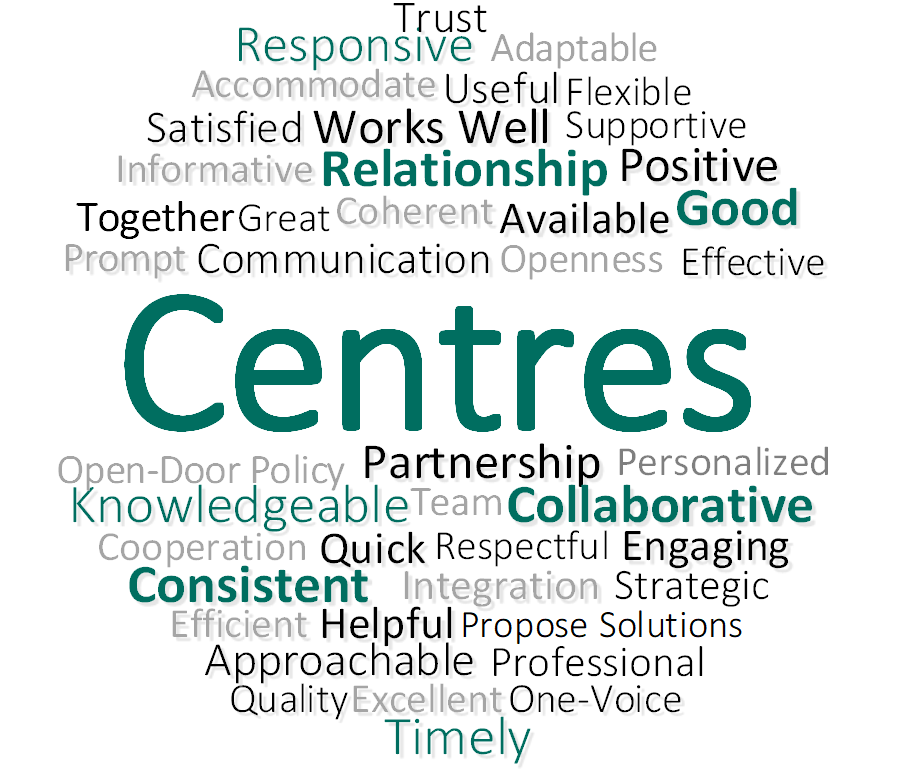
Overall, evaluation findings confirm that the Centres collaborate in a positive and professional manner with their stakeholders and work towards the development of strategic partnerships, which are highly valued. Figure 9 highlights an array of terms used by stakeholders during the key informant interviews to describe the positive impact the collaboration and strategic partnership they have experienced with the Centres.
Figure 9: Stakeholders descriptions of the positive impact of collaborating and establishing strategic partnerships with the Centres
Text version
Figure 9: Stakeholders descriptions of the positive impact of collaborating and establishing strategic partnerships with the Centres
- Centres
- Relationships
- Consistent
- Collaborative
- Good
- Responsive
- Knowledgeable
- Timely
- Partnership
- Works Well
- Available
- Helpful
- Positive
- Quick
- Engaging
- Together
- Satisfied
- Useful
- Approachable
- Trust
- Flexible
- Great
- Quality
- Strategic
- Effective
- Communication
- Supportive
- Professional
- Respectful
- Propose Solutions
- Coherent
- Informative
- Openness
- Accommodate
- Personalized
- Cooperation
- Integration
- Prompt
- Efficient
- Excellent
- Team
- Adaptable
- Open-door Policy
Justice has proposed five principles that contribute to a client-centric relationships (see Table 6). Key findings from the evaluation that describe how the Centres demonstrate these principles through their work are described as follows.
| Client-Centric Principles | Examples from the Centres | |
|---|---|---|
1. Clients make decisions that are informed by legal risk |
||
Client departments and agencies typically have public accountability and decision-making authority. Justice provides legal services that help clients explore options to achieve outcomes while managing, minimizing or eliminating legal and other risks that they face. |
|
|
2. Collaboration |
||
Open and ongoing dialogue across various perspectives promotes consistency in the Government’s legal position along with the best possible outcomes for the client department and Canadians. |
|
|
3. Transparency |
||
As the trusted legal advisor, Justice helps to foster a deeper understanding of legal issues and processes through open communication. In working with Justice, client departments are forthcoming with objectives and facts as they evolve. |
|
|
4. Proactive service |
||
Justice anticipates client department needs through engagement with clients, being aware of developments that impact client business, and greater use of data collection and analysis. Feedback received helps the relationship to evolve. |
|
|
5. Alignment |
|
|
Processes, tools and resources are aligned so that Justice and clients are moving in step with each other and with appropriate tools to get the job done. |
|
|
Good practices
The development of mechanisms (e.g., working groups, regular meetings, joint discussions, etc.) to share information on various topics of interest with relevant stakeholders was identified as a strength. Some examples of collaborative activities achieved by the Centres during the evaluation period, include:
- CLS attended meetings with client departments and agencies organized by the LSUs to foster collaboration, which created a space to have open discussions.
- HRLS helped NLS counsel determine how the litigation strategy was going to unfold, the type of evidence to be brought forward regarding Charter questions, and awareness of other relevant cases in Justice that could have an impact on the litigation outcome.
- CLEL established regular meetings with client departments and agencies, often in person, and shared information on trends or upcoming issues to consider.
- ALC established working groups (e.g., Equitable Compensation, Recognition of Indigenous Rights and Self-Determination).
- CAILS counsel worked together on large litigation files that involved several client departments or agencies and organized a weekly teleconference that included key counsel who were involved on the file to keep everyone informed.
Challenges
Although examples of good collaboration with stakeholders were identified throughout the evaluation, opportunities to enhance strategic engagement with stakeholders (client departments and agencies, LSUs, NLS, and other areas of Justice) were suggested.
- Cross-cutting issues and legal positions in specific areas of the law: Proactive communication and information sharing across all partners (e.g., Centres, client departments, LSUs, NLS, other areas of Justice) can be key factors in supporting strategic engagement with client departments and agencies as well as with Justice partners. Stakeholders identified how the proactive development of clear policies and positions in certain areas of the law (e.g., Indigenous law) would assist in supporting a consistent and strategic approach to client engagement across Justice. Where direction is not clear, the approach can be fragmented and inconsistent. It should be noted, however, that the ability to develop broader knowledge management tools and documents to support greater strategic approaches to knowledge management can be impacted by a number of factors, including Centres’ overall capacity.
- Information sharing practices and engagement: When providing advice to client departments and agencies, there is a need to balance consistency in the application of legal advice across the federal government with the need to consider specific priorities and operating contexts of individual client departments. The ability of Centres to build a strong understanding of the context in which client departments and agencies operate is a determining factor in ensuring that the expertise they provide is actionable. Building this understanding can be done through direct interactions with client departments and agencies or in collaboration with LSUs.
Among Centres who work directly with client departments and agencies (CLEL, OLAD, and CoEPL), there was, at times, a request for greater involvement on the part of the LSUs. Depending on the legal issue at hand, this could involve discussions between the Centre, LSU, and client department or agency, or sharing information more regularly with LSUs (copying LSUs on responses, periodic meetings to provide file updates, etc.). In addition, when Centres work directly with LSUs, there were occasions when the legal advice was more theoretical and less grounded in the practical or operational realities of the client department or agency (e.g., CAILS, ALC, and CIPL). When differences of opinion regarding final advice to be provided to the client arose, it was noted that there was a lack of clarity with respect to how to resolve the issue, in the absence of a formalized processes (e.g., CIPL and ALC).
- Clarity of processes and roles and responsibilities: In order to provide timely, consistent advice for clients, it is important for Justice partners to work together efficiently to provide legal advice. One challenge can be the late engagement of Centres on legal files (e.g., litigation and advisory), which can hinder key discussions and agreement on a direction for a file taking place at an early stage. In addition, some lack of clarity with respect to the roles and responsibilities between the Centres, LSU, NLS, and other areas of Justice was noted among some of the Centres (e.g., ALC, CLEL, CIPL), which could hinder the development of quality advice delivered to clients in a timely fashion.
Opportunity for Improvement: To continue building on what has been achieved thus far, stakeholders suggest the Centres provide guidance on roles and responsibilities; engage legal counsel in LSUs (even for the Centres that have exclusive mandates in the areas of the law covered by their mandate) and the NLS in broader discussions around emerging trends and strategic discussions as applicable. Additional knowledge management and outreach activities could also help create space for strategic discussions and increased information sharing. However, Centres have a lack of time and resources to significantly expand their engagement activities, which will require further discussions among all key stakeholders to determine what is feasible within the current parameters that guide the work of the Centres.
Footnotes
9 In the Findings Section, the term “key informants” refers to those individuals consulted in interviews and focus groups for this evaluation. Several stakeholder groups were consulted, including legal counsel and management within the eight Centres, and representatives of LSUs, NLS, other areas within Justice, and client departments and agencies.
10 In order to more simply and concisely assess risk and complexity of files, a joint risk and complexity rating was used for this analysis. The joint risk-complexity rating scale was developed by the Justice Canada Business Analytics Centre. The scale reflects an amalgamation of the applicable risk and complexity ratings on files at the point in time when effort was recorded in the legal case management system to provide a more comprehensive framework for analysis (i.e., high, medium, low, too remote, and not yet evaluated). For more information, see Risk Complexity (RC) Ratings.
11 Note that the risk and complexity data is based on files that had a valid risk and complexity rating (i.e., low, medium, and high) and does not include files that were not assessed or not applicable. Also, risk and complexity ratings are assigned to the overall files by the file owners, which is not always the Centre.
12 Legal advice related to labour and employment law must be provided by excluded counsel, who are not always present in LSUs; therefore, it may not be feasible for LSUs to respond to low risk and complexity requests. Such requests are also a regular part of assessment in the Centre for purposes of monitoring cross-government trends/impacts and ensuring consistency.
- Date modified: